12.00R20 vs 12R22.5: Which Tyres Should Your HOWO or SHACMAN Use?
The tyre size on an export truck affects heat, repairs, local availability, and downtime. Here is how to choose between 12.00R20 and 12R22.5 before shipment.
Tyre choice belongs in the purchase specification
Buyers often spend days comparing engine power, axle ratios, and body capacity, then accept whichever tyres happen to be fitted. That is a costly shortcut. A tyre size that is common in Qingdao may be difficult to find at the destination, while a tyre built for paved highway work may wear quickly on quarry roads. The wrong choice creates downtime long after the price difference has been forgotten.
The two sizes most frequently discussed for HOWO and SHACMAN heavy trucks are 12.00R20 and 12R22.5. They are both radial commercial truck tyres with a similar nominal section width, but they fit different rims and usually use different air retention systems. They are not interchangeable on the same wheel.
Choose the size before the proforma invoice is finalized. Your quotation should identify the tyre size, construction, tread position, load and speed ratings, brand or agreed equivalent, number of tyres, and spare wheel. If the truck is remanufactured or refurbished, it should also state whether the tyres are new or retained after inspection.
What 12.00R20 and 12R22.5 actually mean
In 12.00R20, the first number is the nominal tyre width in inches, the R means radial construction, and 20 is the rim diameter in inches. This size is commonly supplied as a tube type assembly with an inner tube and flap on a compatible multi-piece rim.
In 12R22.5, the tyre is also roughly 12 inches wide and radial, but it fits a 22.5 inch rim. It is commonly tubeless and mounted on a one-piece drop-center rim. The larger rim leaves a shorter sidewall even though the complete tyre diameter can remain broadly similar.
Those descriptions are common configurations, not a substitute for the maker's data sheet. Some markets and applications use variants, and load capacity differs by tyre model. Confirm the sidewall markings and rim specification for the exact tyre offered.
Do not confuse 12.00R20 with 12.00-20. The hyphen normally identifies bias construction rather than radial construction. A cheaper bias tyre may tolerate some impact conditions, but it generally creates more heat and rolling resistance during sustained highway use. A quotation that says only "12.00-20 tyre" is not detailed enough.
When 12.00R20 is the practical choice
Choose 12.00R20 when the truck will spend much of its life on rough construction roads, quarry approaches, or routes where tube type commercial tyres and 20 inch rims dominate local stock. Mechanics in many African and Central Asian markets know these assemblies well, and tubes, flaps, and repair materials can be easier to source outside major cities.
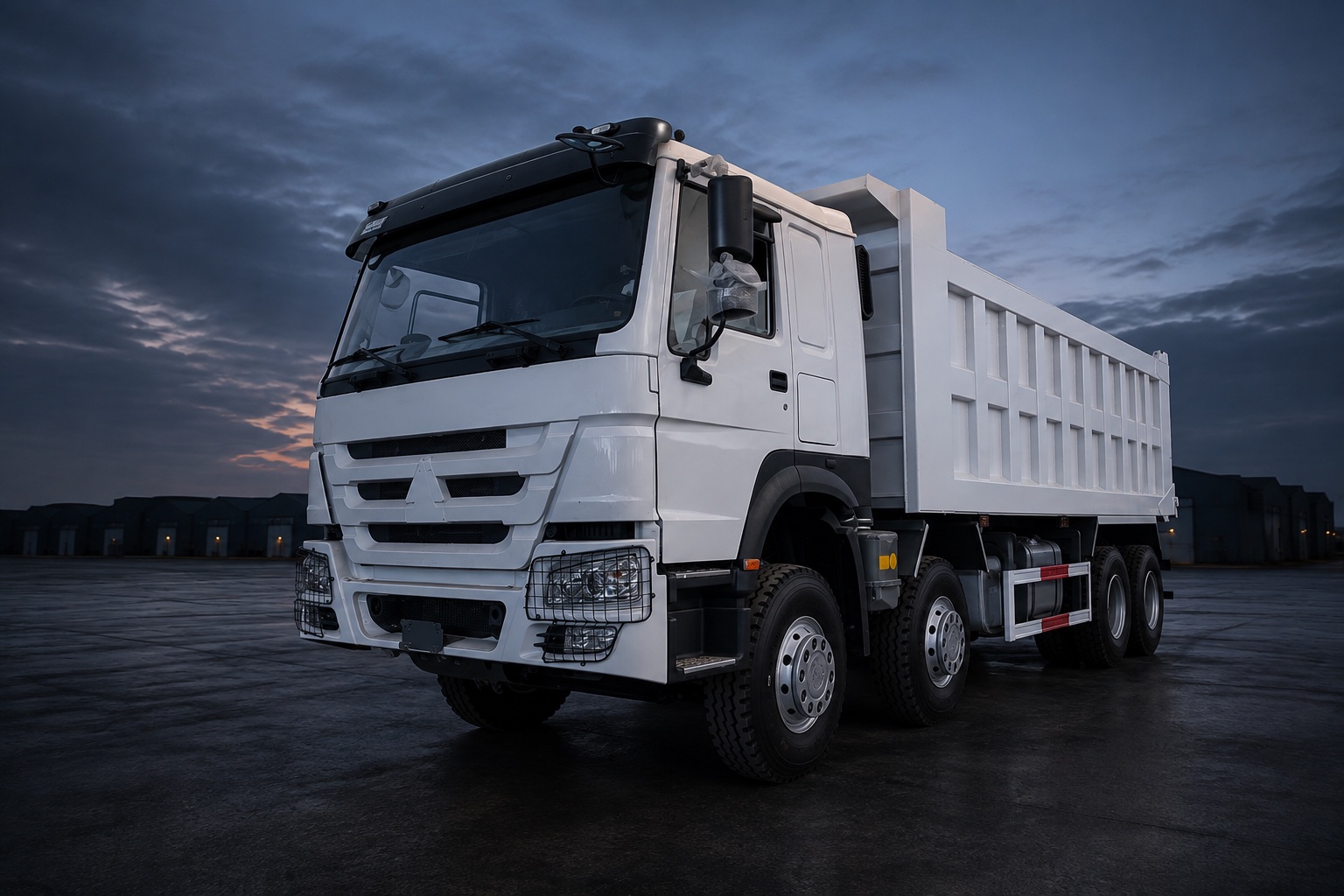
The taller sidewall also gives more deflection between the road and rim. That does not make every 12.00R20 tyre stronger, because casing quality, pressure, load, and speed matter more than the size label. It does give buyers a familiar heavy-duty package for SHACMAN F3000 dump trucks, HOWO 8x4 tippers, and other vehicles that repeatedly enter broken ground.
The trade-off is maintenance. A tube, flap, and multi-piece rim create more components that can rub, pinch, corrode, or be assembled incorrectly. Multi-piece wheel service also requires trained technicians, a restraining cage, and the correct procedure. Never allow an untrained operator to inflate a damaged or incorrectly seated assembly.
When 12R22.5 is the better choice
Choose 12R22.5 for long-haul tractor units that spend most of their time on paved roads and operate where tubeless truck tyres are readily available. A tubeless assembly removes the inner tube and flap, reducing two possible failure points. It also tends to run cooler when pressure and load are correct, which matters on hot, high-speed corridors.
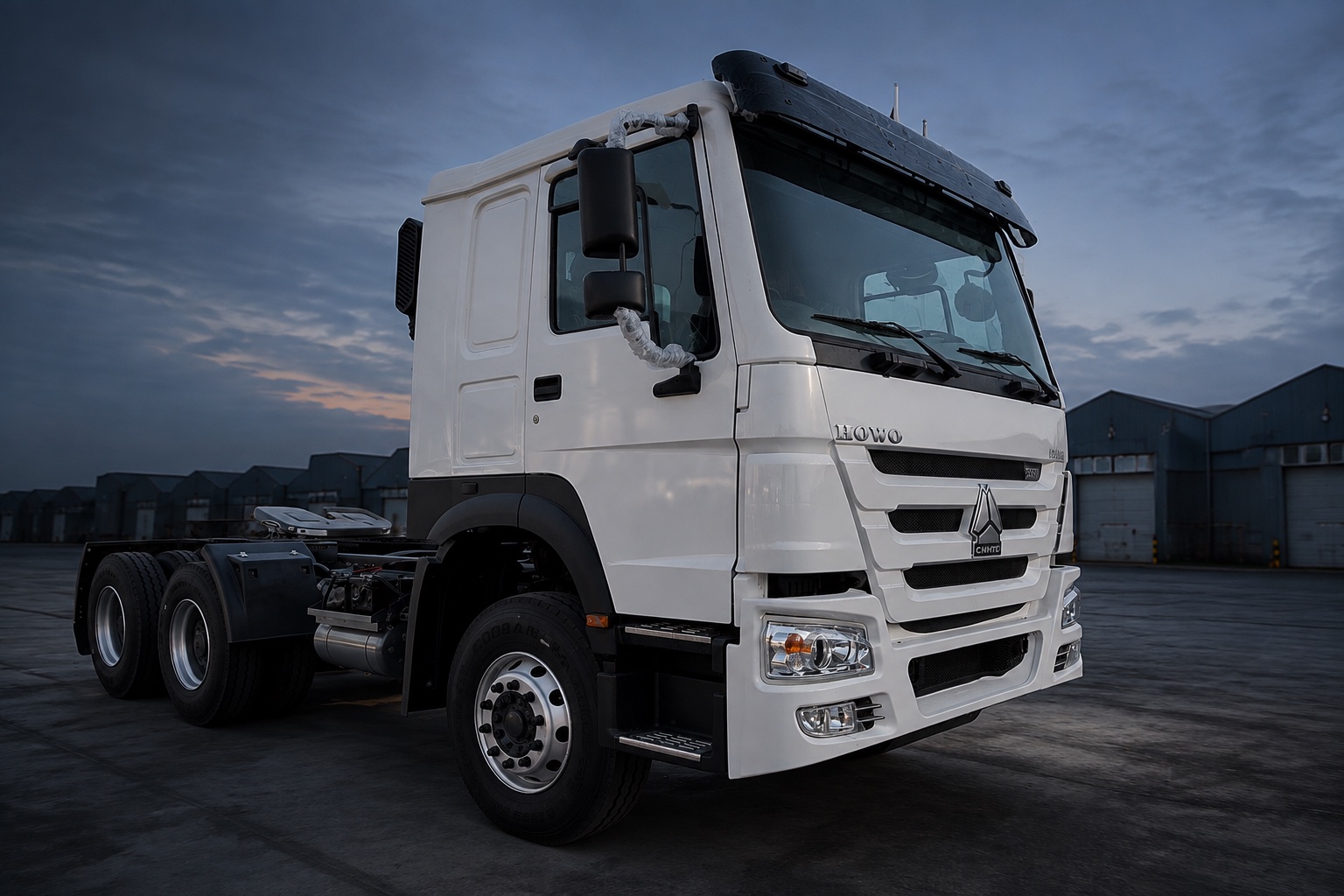
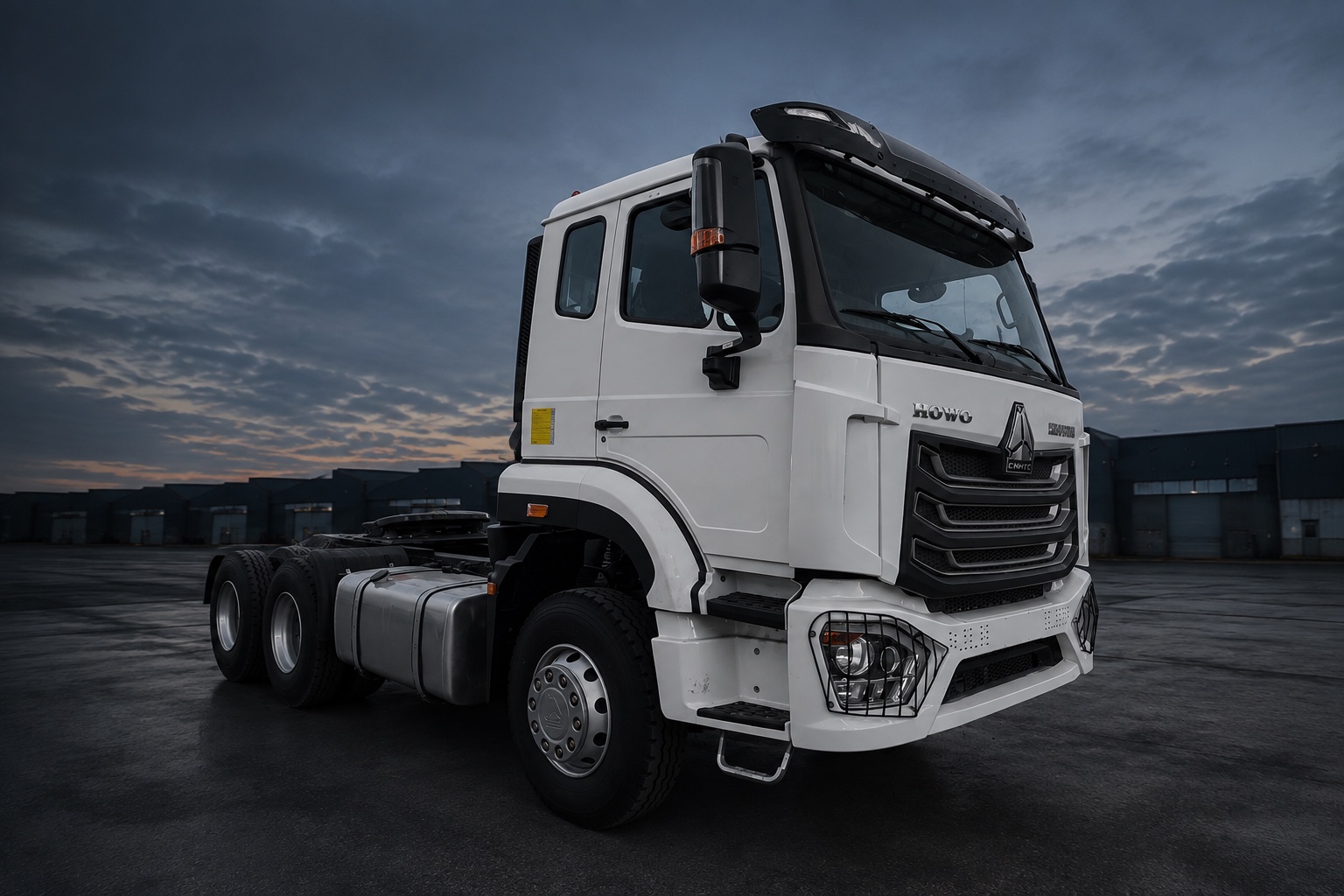
Puncture diagnosis and routine tyre changes can be simpler with a one-piece rim, and many modern fleet depots already standardize on 22.5 inch tubeless tyres. That makes the size a natural fit for a HOWO 371 6x4 tractor, HOWO NX tractor, or SHACMAN H3000 used for regional and cross-border haulage.
The weakness is availability outside the fleet network. If the exact size and load range are scarce in the destination country, the theoretical efficiency advantage means little when a damaged tyre parks the truck for a week. Call two local tyre dealers before ordering and ask what they actually keep in stock, not what they can import.
Size is only half the tyre decision
After choosing the rim system, specify the correct tyre for each axle position.
- Steer tyres should have a rib pattern that tracks cleanly, evacuates water, and wears evenly.
- Drive tyres normally use a more open lug pattern for traction, especially on mixed road and site work.
- Trailer tyres prioritize load carrying, stable wear, and resistance to scrubbing.
- Mixed-service tyres balance road heat with resistance to cuts and chipping.
Do not fit an aggressive drive pattern to the steering axle simply because it looks stronger. Steering response, noise, and irregular wear can all suffer. For dump trucks that divide time between pavement and sites, a mixed-service casing is usually more sensible than either a pure highway tyre or the deepest off-road lug available.
Load index and speed symbol matter more than ply language alone. Ask the supplier to show that the exact tyre's rated capacity covers the maximum permitted axle load at the intended pressure and speed. For dual rear wheels, both tyres in the pair need the same size, construction, tread depth, and closely matched outside diameter. A mismatched pair forces the larger tyre to carry more load and creates heat.
Inspection checks for new and rebuilt trucks
Tyres should be included in the pre-shipment inspection, not treated as cosmetic accessories. Ask the inspector to record:
- The full sidewall size, load index, speed symbol, and manufacturer on every position
- The production date code and whether all tyres meet the agreed age limit
- Tread depth, cuts, bulges, exposed cords, bead damage, and previous repairs
- Rim size, corrosion, cracks, missing fasteners, and compatibility with the tyre
- Valve condition and cold inflation pressure
- Matching size and circumference across each axle and dual pair
- The spare wheel, jack, wheel tools, and inflation hose promised in the order
For a new truck, specify new tyres unless the contract clearly says otherwise. For a remanufactured or refurbished truck, good retained casings can be commercially reasonable, but their age, condition, and remaining tread must be disclosed. Fresh paint on a sidewall is not evidence of condition.
Plan replacement supply before the truck sails
Tyres are bulky, so shipping a pile of loose replacements from China rarely makes sense. A better plan is a sound matched set on the truck, one mounted spare, and a confirmed local source for replacements. If the destination has no dependable stock, price one or two extra mounted spares against the freight impact before deciding.
Keep the final specification in the sales contract and proforma invoice. That gives the inspector an objective standard and prevents a vague phrase such as "standard tyres" from deciding years of operating cost.
Buying a HOWO or SHACMAN for highway, construction, or quarry work? Ruidite supplies new, remanufactured, and refurbished trucks for export from Qingdao. Tell us your route, axle loads, road conditions, and locally available tyre sizes, and we will quote a truck with the wheel and tyre specification written clearly into the order.
Related trucks
Ready to import with confidence?
Tell us what you need. We'll respond within one business day with specifications, FOB Qingdao pricing, and document support for your market.
Request a Quote