6x4 vs 8x4 vs 6x6: Which Axle Configuration Should You Order?
An 8x4 is not a stronger 6x4, and a 6x6 is not just a rougher one. Here is what each drive configuration actually changes before you order a HOWO or SHACMAN.
The numbers describe wheel positions, not axles
Drive configurations are written as two numbers. The first counts wheel positions on the truck, treating each end of an axle as one position. The second counts how many of those positions the engine actually drives. So a 6x4 has three axles, six wheel positions, and four of them driven. An 8x4 has four axles, eight positions, and still only four driven. A 6x6 has three axles with every position driven.
That convention explains most of the confusion buyers run into when comparing quotes. An 8x4 does not give you more traction than a 6x4. Both drive exactly four wheel positions. What the 8x4 adds at the front is a second steering axle, and a steering axle carries weight rather than delivering power. If traction is your problem, the answer is a 6x6, not an 8x4.
6x4: the default, and usually the right one
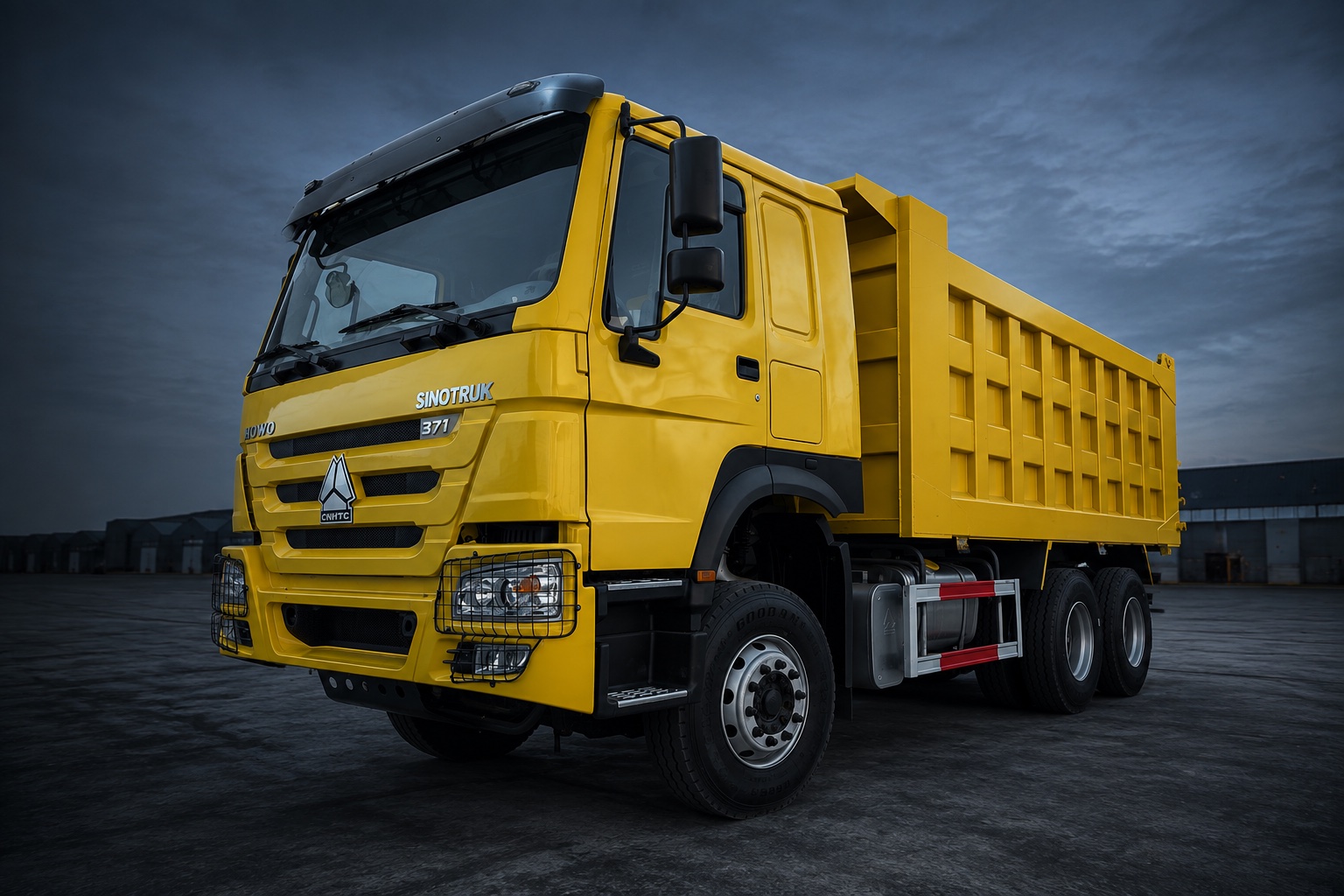
The 6x4 is the workhorse configuration across almost every export market. One steering axle at the front, two driven axles at the rear, and a gross vehicle weight around 25 tonnes on a typical HOWO or SHACMAN chassis.
It is the default for tractor units because a semi trailer carries most of the load on its own axles. The tractor supports the fifth wheel and provides the pulling force, and two driven rear axles give it enough grip on gravel, mud, and site entrances without the cost of a full-time all-wheel-drive system. Our HOWO 371 6x4 tractor, HOWO NX, and SHACMAN H3000 are all 6x4 for exactly this reason.
It is also the default for mixers, tankers, cranes, and mid-size tippers, where the body sits directly on the chassis and the payload is moderate. The SHACMAN F3000 dump truck runs 6x4 with a 16 to 20 cubic metre body, which suits most construction and quarry work.
If you do not have a specific reason to move away from 6x4, stay with it. It is the cheapest configuration to buy, the lightest, the simplest to service, and the one your local mechanics have seen most.
8x4: buy it for payload, not for grip
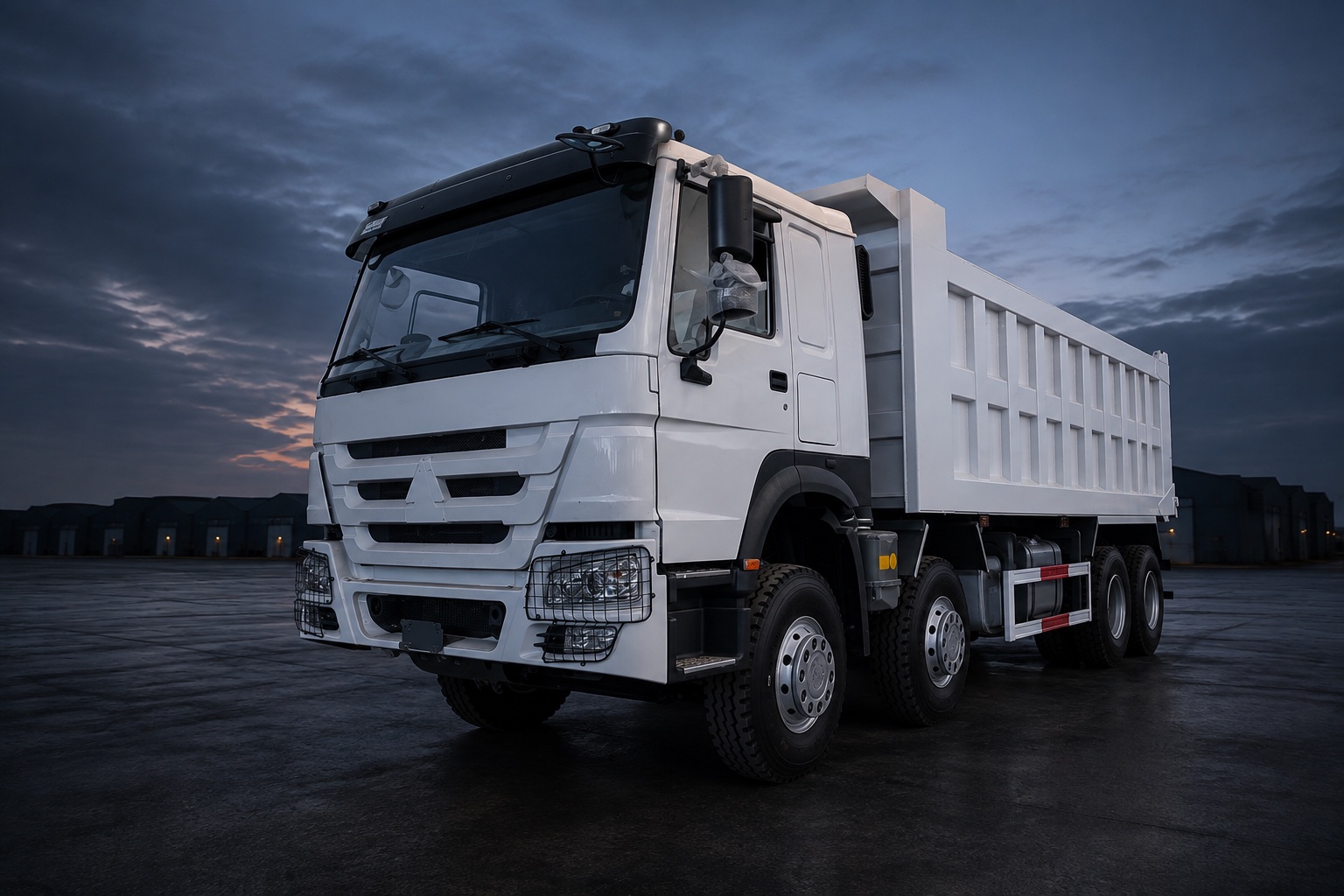
The 8x4 adds a second front steering axle. That axle does not drive, so the truck's climbing ability barely changes. What changes is how much weight the chassis can legally and safely carry.
Two front axles spread the front load across four tyres instead of two, which lets gross vehicle weight rise to around 31 tonnes on a HOWO 8x4 chassis compared with 25 tonnes on the 6x4 equivalent. That is roughly six extra tonnes of payload on every trip, and on a tipper hauling aggregate it usually pays back the price difference inside a season.
The other benefit is ground pressure. The same load spread across eight wheels rather than six presses less hard into a soft haul road, so ruts form more slowly and tyres wear more evenly. Our HOWO 8x4 dump truck carries a 20 to 30 cubic metre body for this reason, and the HOWO 8x4 box van applies the same chassis logic to bulky urban freight.
The trade-offs are real. An 8x4 is heavier empty, so it burns more fuel on the return leg. It has a wider turning circle, which matters on tight city sites. And you are buying and replacing two extra tyres. It only makes sense when you genuinely fill the extra capacity most days.
6x6: for when the road runs out
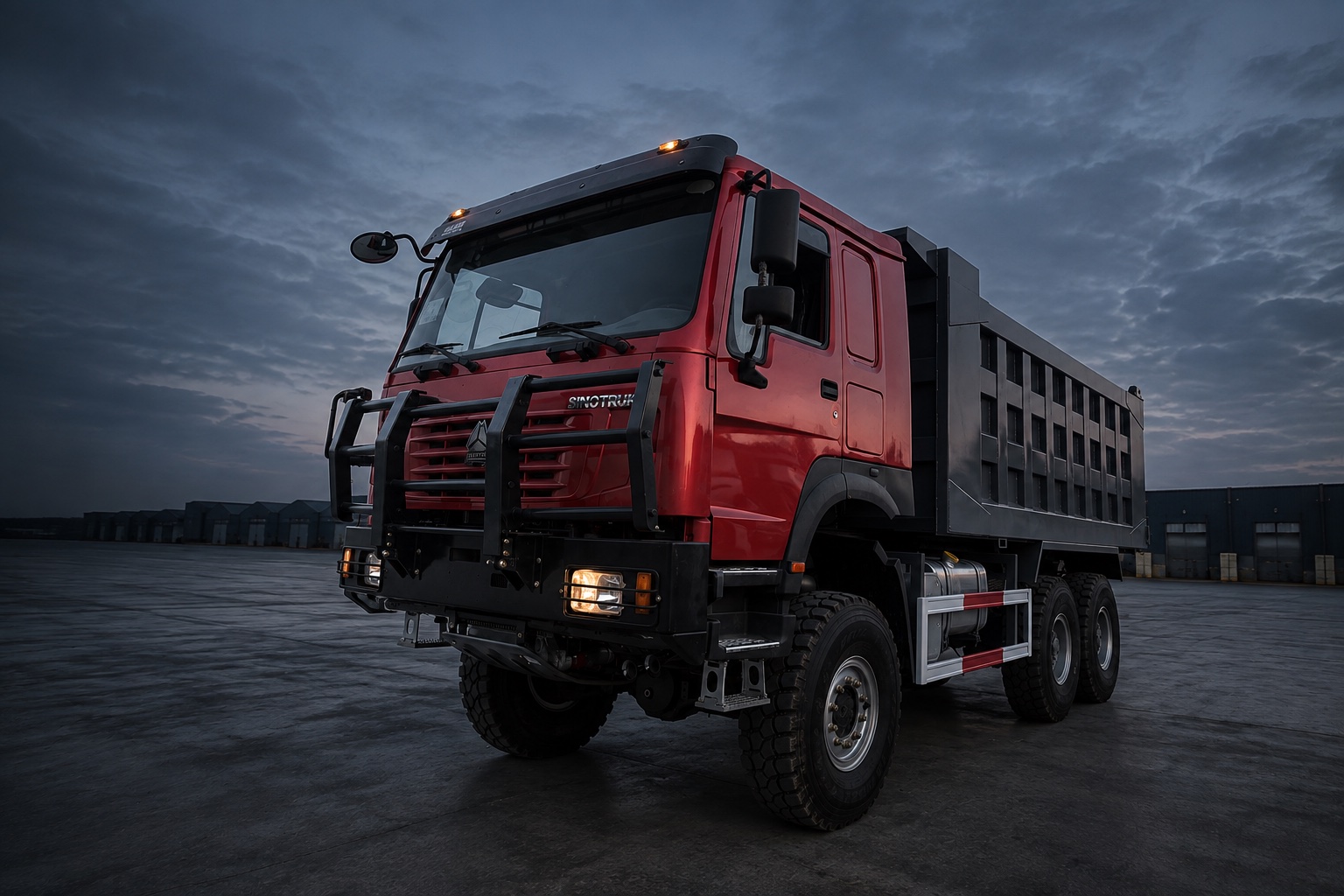
A 6x6 drives all three axles, including the front steering axle. This is the only one of the three configurations that genuinely adds traction rather than capacity.
Buy it when the truck spends real time off formed roads: open-pit mining, mountain construction, seasonal access tracks, forestry, or anywhere a 6x4 would need recovering. A HOWO 6x6 off-road dump truck has a heavy-duty driven front axle, a reinforced frame, and typically carries around 15 tonnes of payload at a 25 tonne gross weight, so you are trading payload for the ability to keep moving.
You pay for that in three ways: higher purchase price, higher fuel burn, and a more complex driveline with a transfer case and front differential to maintain. On sealed roads a 6x6 offers nothing a 6x4 does not, so do not buy one as insurance. Buy it because your site genuinely stops a 6x4.
Axle load limits often decide the answer for you
Before you compare configurations on paper, check what your destination country allows per axle. Most African and Asian jurisdictions regulate axle load as well as gross vehicle weight, and weighbridge enforcement on main corridors has tightened considerably in recent years.
A common pattern is a limit around 8 tonnes on a single steering axle and around 18 tonnes on a driven tandem group, with a national gross limit sitting on top. Those numbers vary, and regional agreements such as the East African harmonised load control rules apply across borders, so ask your transport authority or a local operator rather than assuming.
The practical consequence is straightforward. If your intended load pushes the front axle past the legal single-axle limit, no amount of engine power fixes it, and the fine is assessed per axle. An 8x4 exists precisely to solve that problem. Confirm the limits first, then pick the configuration, not the other way round.
What about 4x2 and 6x2
You will see both in Chinese catalogues. A 4x2 is a two-axle truck with one driven axle, cheap and light, and fine for light distribution work on good roads. A 6x2 has three axles but only one driven, using the third purely to carry weight as a lift or tag axle.
Both are common in Europe, where road surfaces are consistently good and fuel economy dominates the decision. They are much less popular in the markets we ship to, because a single driven axle struggles on unsealed roads and loaded gradients. Most buyers importing into Africa, Central Asia, and the Middle East end up back at 6x4 or 8x4 for sound practical reasons.
Buying rebuilt stock narrows your options
One point specific to remanufactured and refurbished units: you are buying an existing chassis, not specifying a build. Configuration is fixed at manufacture and cannot be changed afterwards in any way worth doing. That means available 6x6 and 8x4 units are thinner on the ground than 6x4, and lead times can run longer while the right chassis is located.
Decide the configuration early, put it on the proforma invoice alongside the chassis number, and confirm it in the pre-shipment inspection photographs. That is far easier than discovering the axle count is wrong once the truck reaches your port.
Matching the configuration to the job
- Pulling a semi trailer on mostly formed roads: 6x4 tractor unit
- Site tipper, mixer, tanker, or crane at moderate payload: 6x4 rigid
- Heavy tipper or high-volume freight where payload is the constraint: 8x4
- Mining, quarry access, or genuinely off-road work: 6x6
Not sure which axle configuration fits your route and your load? We supply new, remanufactured, and refurbished HOWO and SHACMAN trucks in 6x4, 8x4, and 6x6, in both left-hand and right-hand drive, shipped from Qingdao with full export documentation. Tell us your typical load, your terrain, and your destination port, and we will confirm the axle limits that apply in your market and quote the configuration that actually fits.
Related trucks
Ready to import with confidence?
Tell us what you need. We'll respond within one business day with specifications, FOB Qingdao pricing, and document support for your market.
Request a Quote