How to Choose the Right Dump Truck Body Size for a HOWO or SHACMAN
A bigger tipper body does not automatically carry more legal payload. Here is how to match body volume to the material, chassis, route, and local weight limits.
Dump body volume is not the same as payload
Dump truck quotations often lead with a body volume such as 15, 20, 25, or 30 cubic metres. That number describes the space inside the body, not the legal mass the truck can carry. Actual cargo mass depends on the density of the material, while legal payload depends on the chassis weight, axle ratings, tyre ratings, and destination weight rules.
A large body can be useful for low density material, but it can encourage dangerous overloading when filled with rock, wet soil, or dense aggregate. Choose volume only after defining the cargo and calculating the permitted load.
Start with the material you carry most often
The same body behaves very differently with different cargo. Dry agricultural material may fill the body before the truck reaches its weight limit. Sand, crushed stone, demolition material, and wet clay can reach the weight limit while much of the body still looks empty.
Ask the customer or loading site for a measured loose bulk density in tonnes per cubic metre. If several materials are carried, design around the densest regular cargo and treat lighter cargo as a secondary use. Do not size the body using the lightest material just because it produces the largest volume figure in a sales brochure.
Calculate usable volume from legal cargo mass
A practical starting formula is: target body volume equals legal cargo mass divided by loose material bulk density. If the truck can legally carry 24 tonnes of cargo and the material has a loose density of 1.6 tonnes per cubic metre, the calculated volume is 15 cubic metres.
Before using the formula, confirm these inputs:
- Chassis curb weight with fuel, driver, spare wheel, and installed equipment
- Finished body and hydraulic system weight
- Maximum legal gross vehicle weight in the destination country
- Permitted load on each axle or axle group
- Tyre load ratings at the intended pressure
- Actual loose density and moisture range of the cargo
The allowable gross figure on a chassis data sheet is not automatically the legal road limit in every market. Have a local transport engineer, dealer, or authority confirm the applicable limits before finalizing the order.
Match 6x4 or 8x4 to the duty cycle
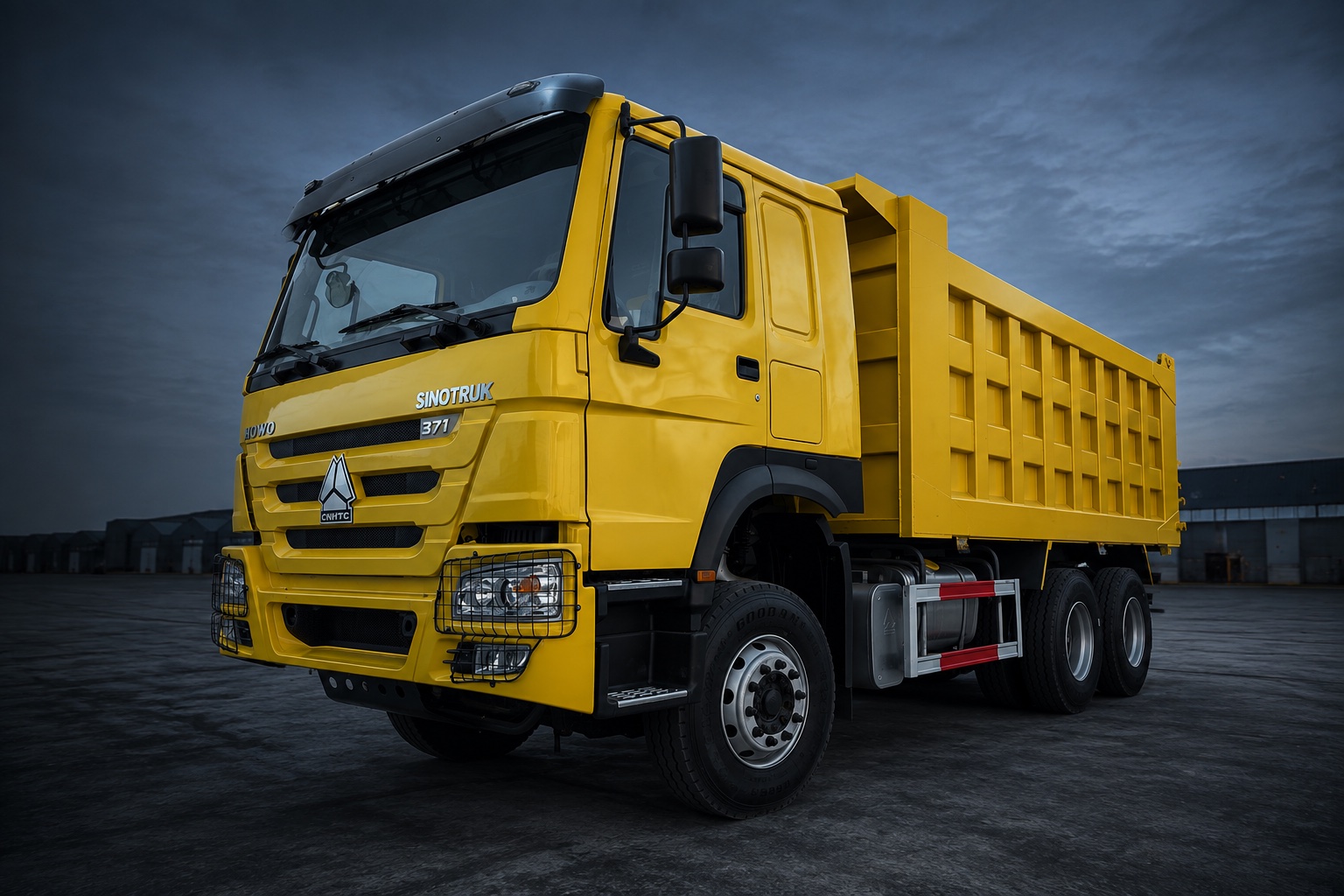
A 6x4 tipper is often easier to maneuver, lighter, and simpler to maintain. It can suit construction delivery, shorter sites, and routes where turning space is limited. An HOWO 6x4 square body dump truck or SHACMAN F3000 dump truck should still be sized around axle loads rather than the largest body that fits behind the cab.
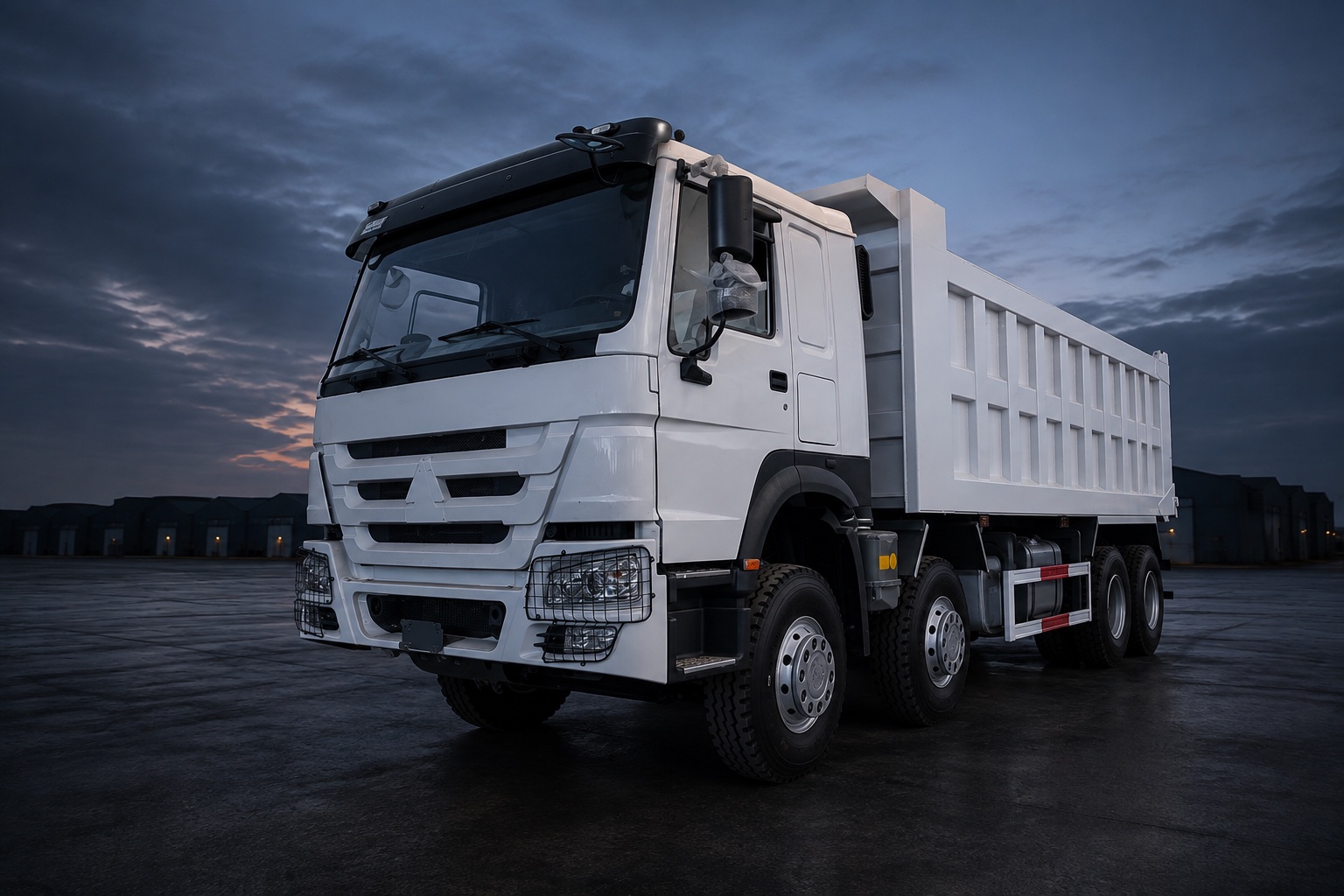
An 8x4 chassis spreads weight across four axles and provides more body length, so it can be a better base for higher legal payload where local rules allow it. The HOWO 8x4 dump truck is a relevant starting point for high volume road work. Extra axles do not remove bridge limits, road class restrictions, or individual axle limits. Our 6x4, 8x4, and 6x6 guide explains the configuration choice in more detail.
Body dimensions must fit the route and loading equipment
Volume can be created with extra length, width, or side height, but each dimension changes operation. A longer body needs more tipping clearance and affects weight distribution. Excess width can breach road regulations and create problems at gates or narrow sites.
Confirm the loader bucket size and loading height. The excavator or wheel loader should place material near the body centre without striking the side walls. Also record the maximum body height when fully tipped, because a body that fits the route when lowered may hit an overhead obstacle during unloading.
Specify the body for the material, not just the volume
Body construction should follow abrasion and impact. Sand and soil may need a different floor thickness from large quarry rock. Hard impact material can dent thin floors, crack welds, damage the front wall, and shorten hinge life. Extra steel improves durability but reduces legal payload, so more thickness is not always better.
Put measurable details in the order:
- Internal body length, width, height, and rated volume
- Floor, side, front, and tailgate steel thickness
- Steel grade where the supplier can document it
- Underframe and crossmember arrangement
- Tailgate type, locking system, and safety chains
- Cab guard, mudguards, ladder, and load cover where required
- Intended material and maximum cargo mass
These details belong on the technical attachment to the proforma invoice, not only in chat messages or photographs.
Hoist geometry and tipping stability matter
A dump body is a working system with the chassis, hydraulic cylinder, pump, power takeoff, hinges, and subframe. The hoist must lift the specified body and cargo at a suitable hydraulic pressure and tipping angle.
Ask for cylinder make and model, rated lifting capacity, operating pressure, tipping angle, hydraulic tank capacity, power takeoff specification, and a diagram of the subframe and rear hinges. The truck must tip on firm, level ground with the parking brake applied and the area clear. No body size makes tipping safe on a severe side slope or beneath overhead hazards.
Chassis choice also affects control. Review axle ratio, suspension, and tyre specification together with the body because every item changes traction, stability, ride, and weight distribution.
Check chassis and body compatibility on rebuilt trucks
For a remanufactured or refurbished truck, confirm that the body was designed for the exact wheelbase and chassis rather than adapted from another unit. Inspect mounting brackets, subframe alignment, clearance above tyres and fuel tanks, hydraulic hose routing, rear overhang, and the gap between cab and body. Fresh paint should not hide cracked welds, twisted rails, or elongated hinge holes.
Record the chassis number, axle models, body dimensions, and hoist identification in the purchase file. If the body or hydraulic system was replaced during refurbishment, ask which components are new, reconditioned, or reused. This creates a clear basis for inspection and later parts orders.
Verify loading and tipping before shipment
A pre shipment inspection should measure the body, confirm steel thickness at several points, inspect welds and mounts, and compare the installed hoist with the contract. Check for hydraulic leaks, hose rubbing, loose pins, abnormal pump noise, tailgate alignment, and safety prop operation.
Where a safe test load is available, raise and lower the body through a complete cycle. Confirm smooth movement, full tailgate release, stable chassis behavior, adequate tyre clearance, and no contact between the body, cab, tanks, or chassis equipment. Photograph the body interior, underside, cylinder plate, hinges, subframe, and chassis markings. Add suitable seals, filters, pins, and hose parts to the truck spare parts plan.
The practical buying decision
Choose body size by working backwards from legal cargo mass and measured material density. Then check axle distribution, road dimensions, loading equipment, steel construction, hoist capacity, and tipping clearance. A correctly matched 15 cubic metre body can be more productive than a 25 cubic metre body that is overweight before it is full.
Ruidite supplies new, remanufactured, and refurbished HOWO and SHACMAN trucks from Qingdao for export. Tell us the material, loose density, legal gross weight, route conditions, loading equipment, and destination port, and we will help match the chassis, body volume, and hydraulic system before you order.
Related trucks
Ready to import with confidence?
Tell us what you need. We'll respond within one business day with specifications, FOB Qingdao pricing, and document support for your market.
Request a Quote