How to Choose Fuel Tank Capacity for a HOWO or SHACMAN Truck
A larger fuel tank can reduce stops, but it also changes weight, chassis space, and your exposure to fuel quality. Here is how to specify the right capacity before export.
Fuel tank capacity is part of the truck specification
Fuel tank capacity often appears as one small line on a quotation, yet it affects how far a truck can work between planned stops, where weight sits on the chassis, how much space remains for equipment, and how the operator manages fuel quality. It is not simply a choice between a small tank and a large tank. The right capacity depends on the engine's real consumption, the route, available fuel stations, payload, axle loading, and whether the truck is a tractor, tipper, tanker, mixer, or box body.
For a HOWO or SHACMAN export buyer, a fuel tank should be specified with the same care as the gearbox and wheelbase. A truck that has to detour for fuel loses productive hours. A tank that is unnecessarily large adds cost and can complicate body layout. The useful goal is enough practical range with a safe, serviceable installation.
Start with usable range, not the brochure number
The range calculation begins with fuel use per 100 kilometres, but this number changes with the work. A long-haul tractor on a steady paved route can consume very differently from a tipper starting and stopping at a quarry. Payload, gradients, traffic, tyre pressure, driver habits, idle time, body aerodynamics, and road surface all matter.
Use your own fleet records where possible. If this is your first truck, ask operators running comparable loads on comparable roads, then add a sensible margin. Divide the usable litres in the tank by the expected litres per 100 kilometres and multiply by 100. Do not assume every litre in a nominal 400 litre tank is usable. You need a reserve so the pickup does not uncover on a slope and so the driver does not routinely run the system nearly dry.
For example, a tractor that normally uses 35 litres per 100 kilometres and carries 350 usable litres has a theoretical range of about 1,000 kilometres. That does not mean it should be dispatched for 1,000 kilometres without a planned stop. Fuel availability, traffic delays, route diversions, and a reserve requirement reduce the practical distance. Build the route around reliable fuel points, then specify enough capacity to cover the longest realistic gap with margin.
Match the tank to the truck's job
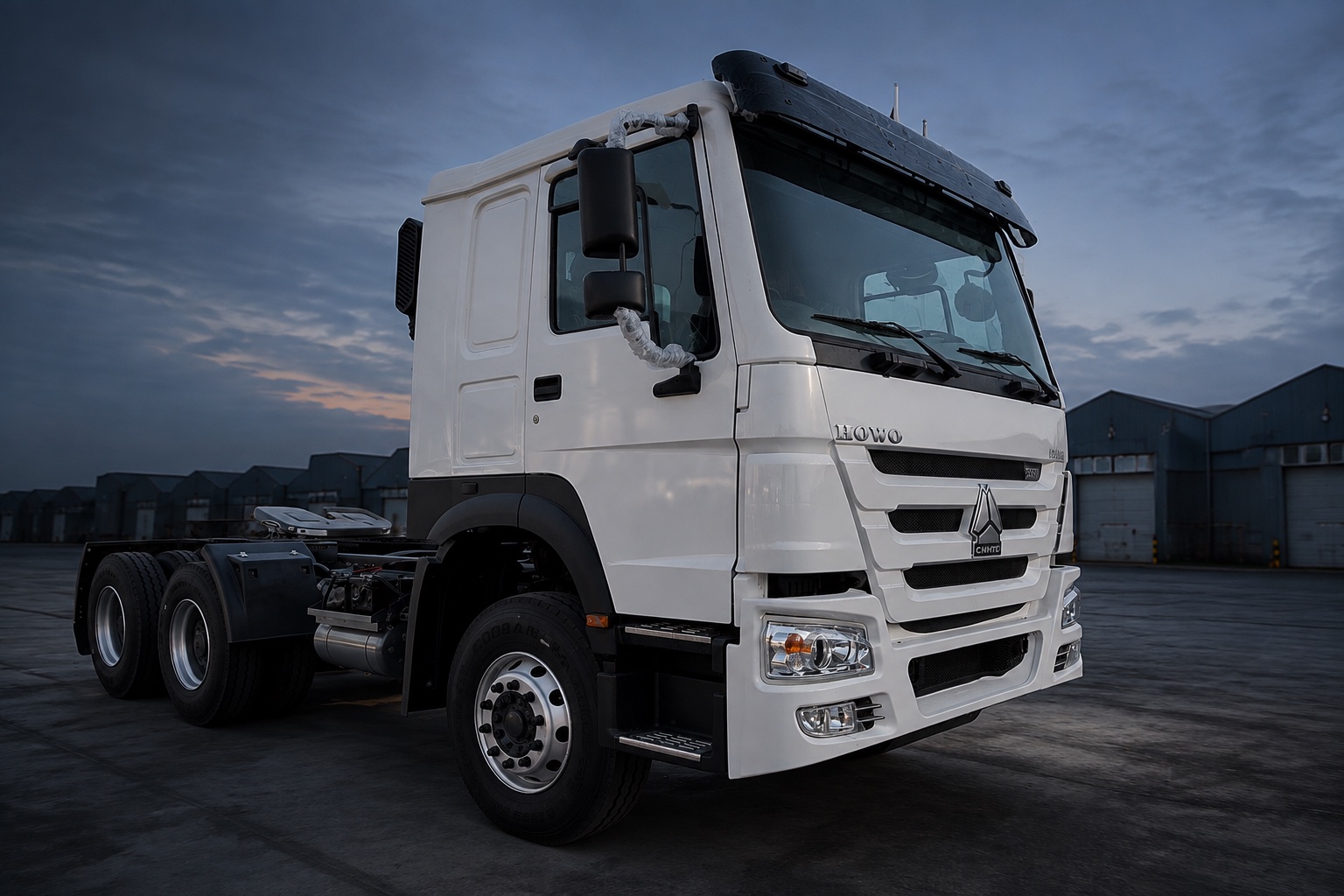
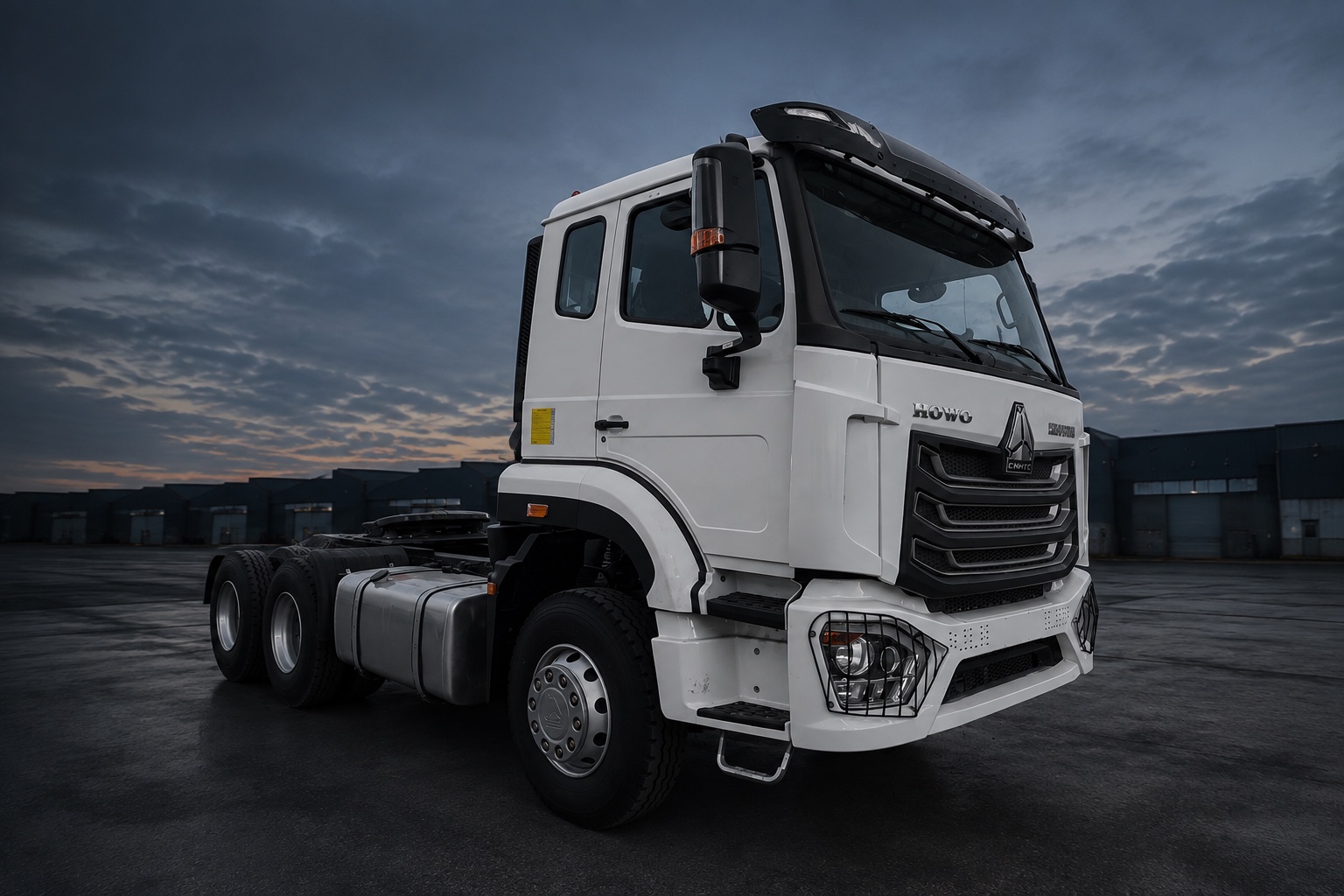
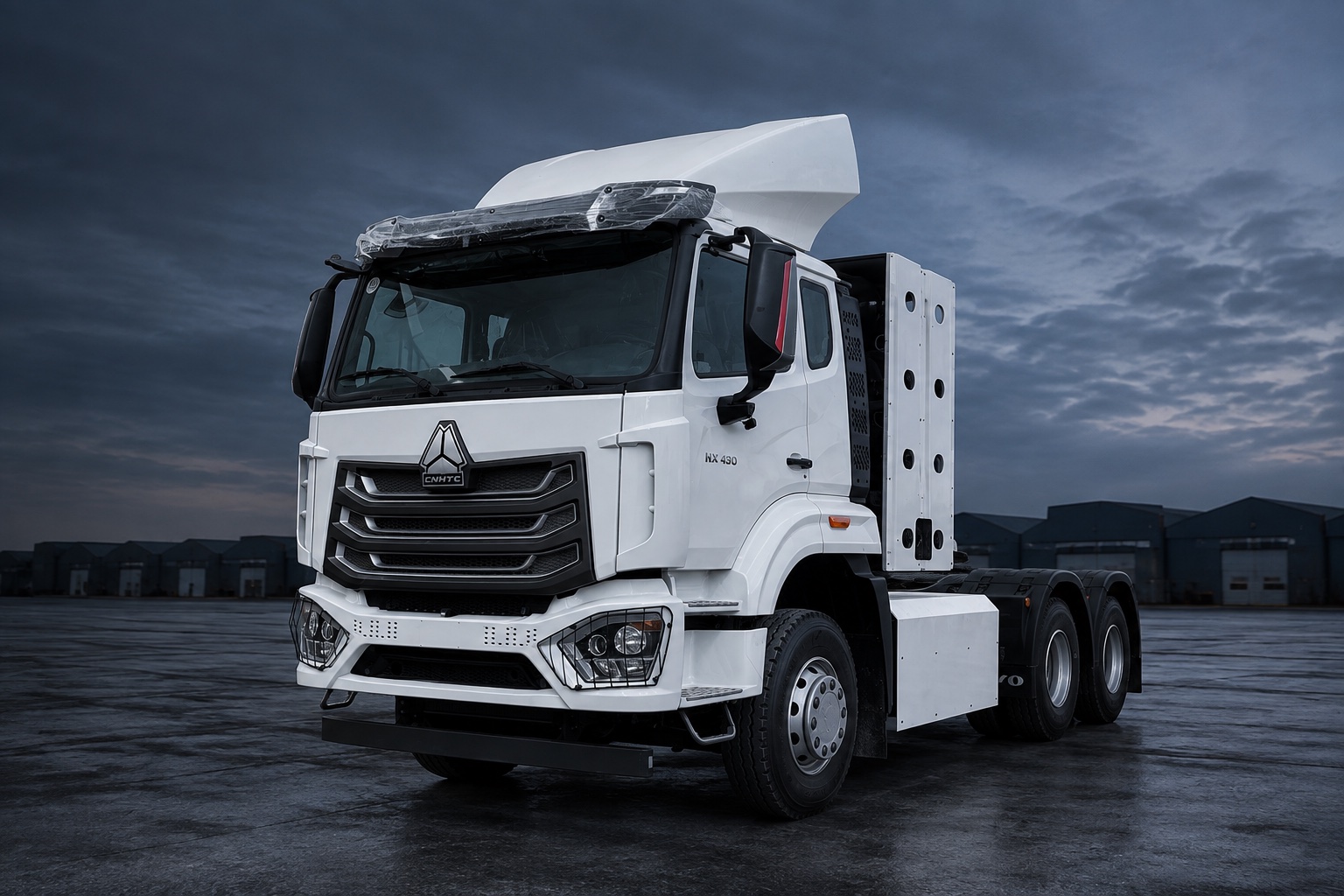
A HOWO 371 6x4 tractor or SHACMAN H3000 tractor on regional or cross-border haulage may benefit from a larger tank or twin-tank arrangement. Longer range can reduce unplanned refuelling and give the dispatcher flexibility where fuel stations are unevenly spaced. But the tanks must still leave room for batteries, air reservoirs, spare wheel carriers, steps, and trailer connections.
A site tipper has a different pattern. A SHACMAN F3000 dump truck or HOWO 8x4 dump may make repeated short runs from a quarry, port, or construction site. It needs reliable daily fuel supply and a tank protected from rocks, mud, and loading equipment more than it needs maximum highway range. A tank sized for one or two working shifts can be more sensible than adding capacity that is carried around all day.
Tankers, mixer trucks, crane trucks, and box bodies also compete for chassis space. Hydraulic equipment, body subframes, toolboxes, water tanks, or a mixer drum can limit where fuel tanks fit. Give the supplier the proposed body drawing before the chassis is finalized. A body builder should not discover after arrival that a tank blocks a hydraulic component or creates an unsafe access step.
Larger tanks add weight and affect axle loading
Diesel is heavy. One litre is roughly 0.83 to 0.85 kilograms, so 200 extra litres can add around 170 kilograms before counting the tank and brackets. That may be minor on a long-haul tractor, but it is still weight that must be included in the axle-load calculation and payload plan.
The important point is where the tank is mounted. A side-mounted tank ahead of the rear bogie distributes weight differently from one placed farther back. On a truck with a high body or a full tipper load, side-to-side balance also matters. Ask for the tank location on the chassis drawing and confirm the final axle loads with the tank full and the body installed.
A bigger tank never increases legal gross weight. The truck's gross vehicle weight, axle ratings, tyre ratings, body weight, and destination rules still control payload. If you operate through weighbridges, include full fuel in your normal legal loading calculation instead of treating it as free weight.
One tank or twin tanks
Twin tanks can provide range without forcing one very long tank into a restricted chassis space. They may improve left-to-right balance when designed correctly, and they can make it easier to use available rail space around equipment. Some tractor configurations use connected tanks that feed the same system, while others use a transfer arrangement. The exact plumbing and capacity should be named in the specification.
More components also mean more inspection points. A twin-tank setup has additional lines, valves, mountings, and possible leak locations. Confirm how the tanks are connected, where the filler points sit, and whether both tanks can be drained and cleaned. Ask for the tank material, wall construction, cap type, straps, and protection guards rather than accepting a general phrase such as dual fuel tanks.
For operations in remote areas, simplicity is valuable. One accessible tank with a protected filler and a clear fuel gauge may be the better commercial choice if it already covers the route. Choose twin tanks because the range and chassis layout justify them, not because they look more premium in photographs.
Fuel quality and filtration matter as much as capacity
A large tank does not protect an engine from contaminated diesel. Water, dust, poor storage, and mixed fuel can block filters, damage injectors, or cause repeated downtime. Before ordering, confirm the engine's fuel system, water separator, primary and secondary filter part numbers, and the recommended service intervals. This matters particularly for modern high-pressure fuel systems.
Keep the tank clean during shipping and handover. The filler cap should seal correctly, the breather should be protected, and the pickup and return lines should be secure. If the truck is remanufactured or refurbished, ask for evidence that the tank has been cleaned and inspected rather than merely painted. Ship a starter set of filters and seals using the same disciplined approach described in our spare parts guide.
Drivers also need a simple refuelling process: use trusted suppliers, avoid filling from dirty cans, let water and sediment settle in storage tanks, and record abnormal consumption. A fuel theft problem is operational, not a tank-size problem, but a lockable cap and clear fuel monitoring make it easier to manage.
What to confirm before you sign the proforma invoice
Put measurable tank details on the proforma invoice, alongside the engine, gearbox, axle ratio, and body specification. At minimum, confirm:
- Nominal capacity and expected usable capacity
- Number of tanks, material, and mounting position
- Chassis drawing showing tanks, batteries, air reservoirs, and body equipment
- Filler location, cap type, sender unit, gauge, and any transfer system
- Fuel filter and water separator model numbers
- Protective guards for the route and body type
- Full-fuel axle-load calculation and remaining legal payload
These details stop a general quotation from becoming a surprise at the body-builder's yard. They are also useful when ordering replacement parts years later.
Inspection checks before shipment
Include fuel-system checks in the pre-shipment inspection. Verify that the installed capacity and number of tanks match the contract, that straps and brackets are secure, and that no line rubs against a sharp chassis edge. Inspect for dents, leaks, damaged threads, loose guards, and inaccessible drain points.
The inspector should check the fuel gauge response, filler-cap seal, water separator, filter housings, and the routing of supply and return lines. A short road test can reveal leaks or a faulty gauge that is not obvious while stationary. Photograph the tank labels, mounting points, and part numbers for your purchase file.
The practical choice
Choose the smallest fuel capacity that reliably covers your longest working gap with a reserve, then confirm that it fits the body layout and full-fuel axle calculation. Choose a larger or twin-tank setup only when the route, fuel availability, and chassis space create a clear benefit. For rough site work, protection and serviceability may matter more than maximum range. For long-haul work, planned range and fuel-system cleanliness are often worth more than a headline tank size.
Ruidite supplies new, remanufactured, and refurbished HOWO and SHACMAN trucks from Qingdao for export. Tell us your route, normal payload, body type, fuel-stop spacing, and destination, and we will help specify a practical fuel tank and chassis layout before you order.
Related trucks
Ready to import with confidence?
Tell us what you need. We'll respond within one business day with specifications, FOB Qingdao pricing, and document support for your market.
Request a Quote