How to Choose the Right Wheelbase for a HOWO or SHACMAN Truck
Wheelbase affects body fit, turning circle, axle loading, and route access. Here is how to specify the right HOWO or SHACMAN chassis length before you place an order.
Wheelbase is a working specification, not a catalogue detail
Buyers often compare engine horsepower, axle configuration, and cab condition, then accept the wheelbase listed on the first quotation. That can be an expensive omission. The distance between the front and rear axle groups affects what body can be fitted, how the truck turns, how weight sits on each axle, and whether it works on your actual route.
Wheelbase is not the same as overall truck length. It is the distance measured from the centre of the steering axle to the centre line of the rear axle group. On a 6x4, that rear reference point is normally the midpoint between the two driven axles. A longer wheelbase gives more usable chassis rail behind the cab. A shorter one concentrates the truck into a tighter footprint.
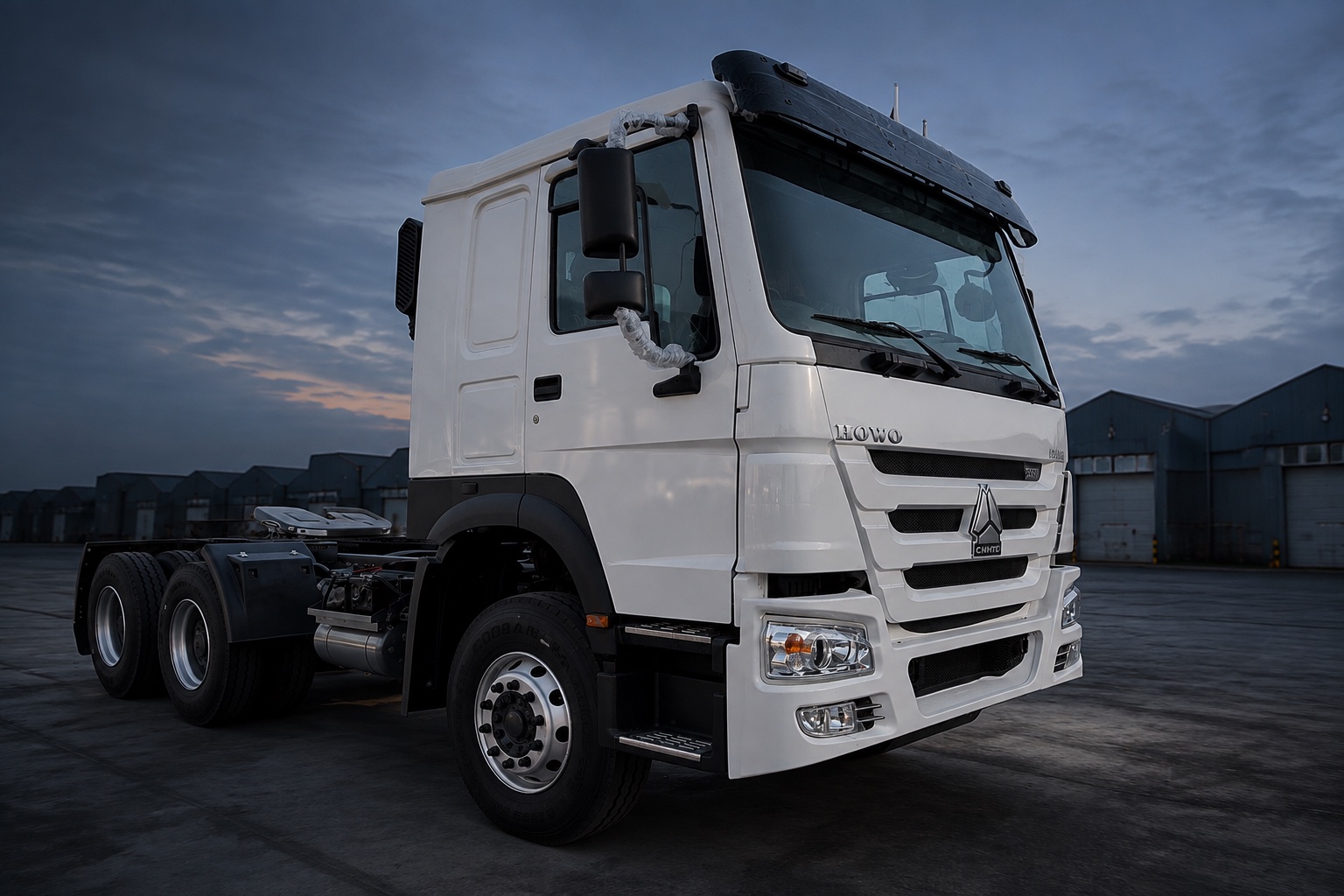
For a HOWO 371 6x4 tractor or SHACMAN H3000 tractor, the fifth wheel and trailer determine most of the carrying geometry. For a tipper, box van, tanker, mixer, or crane, the wheelbase helps determine the body length, overhang, and axle loads. The correct answer comes from the job, not from a number that sounds larger.
Start with the body and payload
Choose the body first, then choose the chassis that supports it. Tell the supplier what the truck must carry, the required body volume or equipment layout, the intended material, and the normal payload. A 16 to 20 cubic metre dump body on a 6x4 chassis has different rail, subframe, and centre of gravity needs from a long dry-freight body or a fuel tanker.
A longer wheelbase can provide more mounting space for a body, hydraulic tank, spare wheel carrier, toolboxes, and fuel tanks. It may also reduce rear overhang, which is the distance from the last axle to the rear of the body. Keeping that overhang sensible improves stability and stops the tail from striking ramps, ferry decks, or rough site entrances.
But a long chassis does not automatically carry more legal payload. Payload is set by the truck's gross vehicle weight, axle ratings, tyre ratings, body weight, and the axle-load rules in the country where it will operate. An 8x4 may carry more because it has an additional steering axle. A long 6x4 does not gain a new axle simply because its rails are longer. See our 6x4 vs 8x4 vs 6x6 guide before assuming chassis length solves a weight problem.
Short wheelbase: better where space and traction matter
A shorter wheelbase generally turns in a smaller radius. That is useful for urban distribution, tight depots, mine sites, congested ports, and construction areas with narrow access roads. It can also improve breakover clearance on uneven ground because the chassis has less length between the axle groups.
For a 6x4 dump truck such as the SHACMAN F3000 dump, a compact wheelbase is often the practical choice when the truck makes repeated runs into pits, aggregate yards, and building sites. The body stays within a manageable length, the truck is easier to position under a loader, and the driver has less tail swing to manage.
The trade-off is packaging. There may be less room for a long cargo body, large auxiliary tanks, or a crane and body combination. A very short chassis also makes it easier to overload the rear axles if the body builder puts too much weight behind the bogie. Ask for an axle-load calculation, not only a body drawing.
Long wheelbase: useful for volume, not a universal upgrade
A longer wheelbase suits body types that need linear space. Common examples include high-volume box bodies, curtain-sided cargo trucks, long flatbeds, recovery equipment, and some tanker layouts. The extra rail length lets the body builder distribute the load over a longer platform and place equipment where it remains accessible.
It also makes sense when the truck will spend most of its time on paved intercity roads, where a slightly wider turning circle is not a daily limitation. A longer wheelbase can feel more stable in a straight line, but this should not be confused with a guarantee of safer handling. Suspension setup, tyre condition, body height, loading, and driver behaviour matter at least as much.
The drawbacks show up at the destination. A long chassis can struggle in small yards, crowded city streets, and winding quarry routes. Rear overhang and approach angles still need checking after the body is fitted. If your operation includes one difficult turn or ramp every day, measure it before you order. A truck that cannot enter the loading point loses more money than a few extra cubic metres can earn.
Tractor units need a different question
For a tractor unit, buyers should not select wheelbase by trailer length alone. The key measurement is the relationship between the fifth wheel, rear axle group, cab clearance, and the trailer's kingpin and front swing. A long wheelbase tractor can improve space for larger fuel tanks or equipment, but it may reduce manoeuvrability in container yards and at loading bays.
Send the supplier details of the trailers you will pull: kingpin setting, typical gross combination weight, trailer width, and whether the route includes sharp turns, weighbridges, or ferry ramps. If you already operate trailers, share photos and measurements. A correct fifth wheel position is as important as the chassis wheelbase, because moving it changes the load shared by the steering and drive axles.
Check the regulations before the proforma invoice
Every market controls some combination of overall length, axle spacing, axle load, rear overhang, turning circle, and body dimensions. The limits vary by country and can change, especially for cross-border corridors. Your clearing agent, transport authority, or local fleet manager should confirm the current rules for the vehicle class and route.
Do this before the proforma invoice is accepted. A truck can be mechanically excellent yet still be difficult to register or operate legally if the body is too long or the axle spacing does not suit a local bridge formula. For remanufactured and refurbished trucks, inspect the actual chassis plate and configuration as well, because chassis length cannot be changed cheaply after export.
What to put in your purchase specification
A good enquiry gives the supplier enough detail to quote the right chassis instead of a generic one. Include:
- Truck type and exact work, such as aggregate tipper, fuel delivery, long-haul tractor, or box-body distribution
- Required body length, body volume, and estimated body weight
- Normal payload and the heaviest legal load expected
- Typical road surface, tightest yard or turning point, and steepest ramp
- Destination country and any cross-border routes
- Tyre size, axle configuration, fuel tank capacity, and equipment that needs rail space
- Whether the truck is new, remanufactured, or refurbished
Then ask for a dimensioned chassis drawing, axle ratings, gross vehicle weight, turning-circle data, and the proposed body mounting length. Put the agreed wheelbase and body arrangement in the contract, and ask for it to be checked during pre-shipment inspection.
The practical choice
Choose the shortest wheelbase that safely fits the body, payload, and equipment your operation genuinely needs. That usually gives you better manoeuvrability and fewer route restrictions. Move longer only when the body layout, load distribution, or equipment package requires it.
Ruidite supplies new, remanufactured, and refurbished HOWO and SHACMAN trucks from Qingdao for export. Tell us your body type, payload, destination, and route conditions, and we will help specify a chassis, wheelbase, and axle configuration that match the work before you place the order.
Related trucks
Ready to import with confidence?
Tell us what you need. We'll respond within one business day with specifications, FOB Qingdao pricing, and document support for your market.
Request a Quote