How to Specify a Cargo Box Body for a HOWO or SHACMAN Truck
A cargo box body needs to match the goods, loading method, route, and chassis. Here is what to specify before ordering a HOWO or SHACMAN rigid truck.
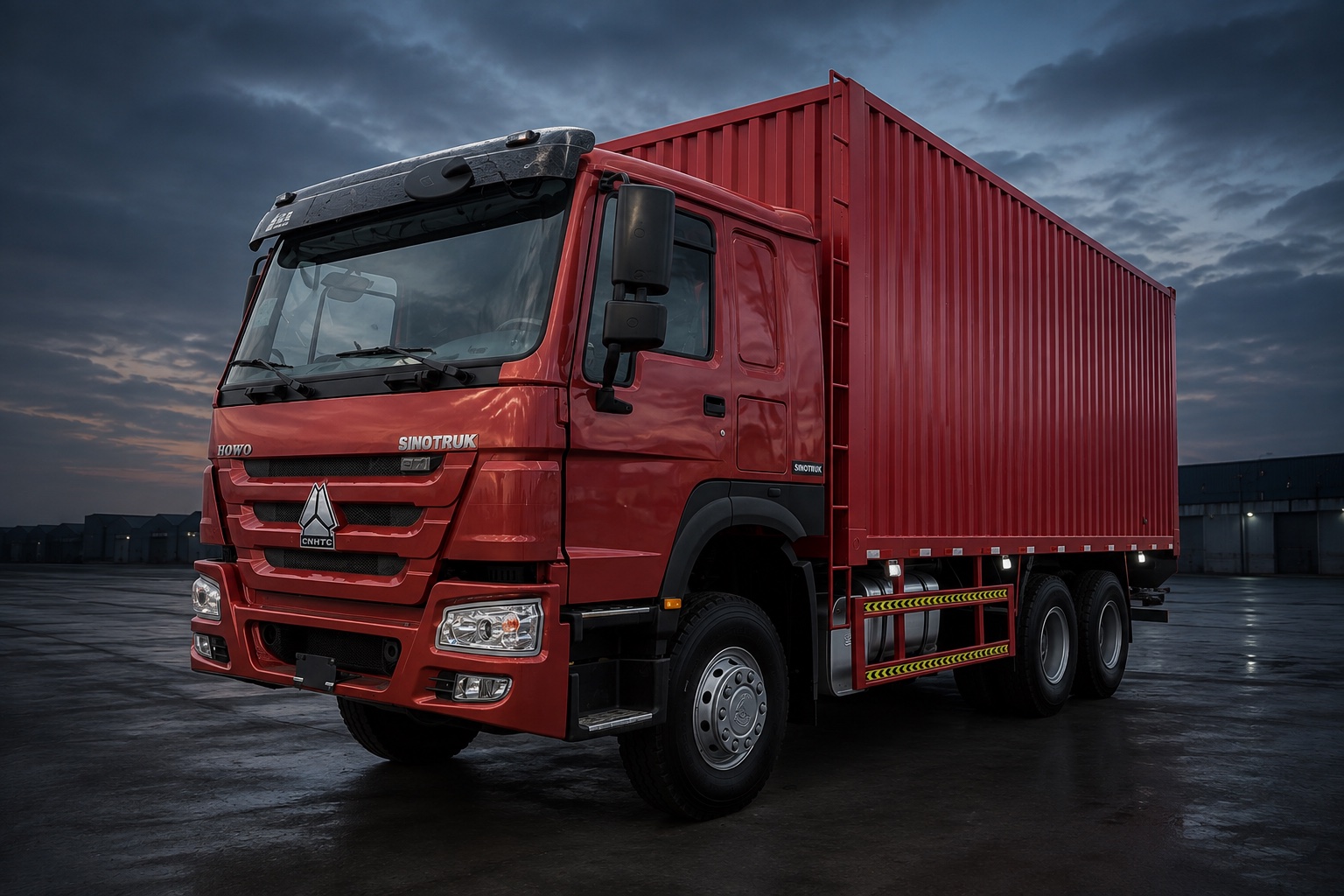
A cargo box body can make a practical rigid truck for distribution, agricultural goods, packaged materials, retail stock, and protected general freight. But the body is not a separate decoration added after the truck arrives. Its length, height, floor, doors, subframe, and weight change how the HOWO or SHACMAN chassis handles, what it can carry legally, and whether it can work at the loading points that matter.
The right order starts with the cargo and route. A buyer who asks only for a box truck may receive a generic body that looks acceptable in photos but has the wrong internal height, weak floor, unsuitable rear access, or poor axle loading when it is full. A useful specification gives the chassis supplier and body builder the same clear brief.
Start with the cargo, not the outside dimensions
List the goods that will fill the body on a normal working day. Cartons, bagged food, beverage crates, spare parts, furniture, palletised goods, and loose agricultural produce put different demands on the floor, walls, tie points, and door opening. Note the maximum item length, height, width, and weight, then identify whether goods are loaded by hand, pallet jack, forklift, or tail lift.
Volume alone can mislead. A light but bulky load needs internal height and cube, while dense goods can reach the legal weight limit before the body looks full. Calculate payload with full fuel, driver, tools, spare wheel, and loading equipment included.
Choose the chassis and wheelbase as one package
A cargo body must be matched to the chassis rails, axle configuration, gross vehicle weight, and wheelbase. A longer body may need a longer wheelbase, but a long wheelbase is not automatically the better commercial choice. It can reduce manoeuvrability in crowded yards, small markets, ports, and narrow city streets.
Ask for a dimensioned chassis drawing before the body is built. It should show the wheelbase, rear overhang, fuel tank, batteries, air tanks, spare-wheel position, exhaust arrangement, and equipment occupying rail space. Compare it with the proposed body drawing.
Our wheelbase guide explains why body length, turning space, and load distribution must be considered together. An 8x4 box-body chassis can offer a different payload and axle layout from a 6x4 truck, but the destination's axle-load, length, and registration rules still decide what is legal.
Set body length, internal height, and door openings
Write the required usable internal length, width, and height into the purchase specification. Do not rely on an external body length because wall thickness, lining, front bulkhead construction, and rear-door arrangement reduce the working space. If pallets are used, confirm the loading pattern with the pallet size and forklift clearance rather than assuming that a nominal width will work.
Barn doors suit many general-freight applications and can give a full-width opening. A roller shutter can be convenient for frequent stops, but it needs suitable headroom and secure operation. Side doors or a side curtain may help multi-drop work, but they also affect security, wall strength, and weather sealing.
For a body that will carry high-value or moisture-sensitive goods, ask how the doors seal, lock, and drain. A strong lock does not compensate for a poorly aligned frame or water entry around the roof and door edges. Request clear details of the locking hardware rather than a general description such as secure cargo body.
Specify the floor for the loading method
The floor takes repeated point loads from pallets, trolleys, forklift wheels, and loose cargo. Specify the floor material, thickness, load rating, surface finish, and any reinforcement required for the intended goods. A smooth floor may work for cartons but be unsafe for wet sacks or unsecured equipment. A forklift needs suitable floor strength and a door opening that gives it safe access.
Ask for cargo tie rails, lashing rings, or other retention points that match the goods. Their positions and ratings should be stated, not guessed after delivery. For refrigerated or insulated cargo, the floor and wall system must also accommodate the required temperature equipment and drainage. Do not order insulation for general freight unless the cargo and route justify the extra weight and cost.
Keep axle loading and centre of gravity in view
The body can be long enough and still be wrong if its empty weight or loaded centre of gravity overloads an axle. The heaviest cargo should be placed as low and as close to the correct axle area as practical. Goods stacked high or concentrated behind the rear axle can make a truck unstable and create legal axle-load problems.
Ask for an axle-load calculation for the completed truck, not just the bare chassis. It should include the body, full fuel, driver, loading equipment, and the intended payload distribution. Confirm the chassis axle ratings and tyre ratings, then compare them with the current rules for the destination and route. Local transport authorities or a competent fleet operator should confirm the limits before the order is final.
Build the body for weather, corrosion, and repair
Cargo bodies face rain, dust, rough roads, loading damage, and vibration. Ask for the wall material, roof construction, subframe design, coating system, mudguards, and water-drain paths. A body for coastal delivery or wet-season roads may need more attention to corrosion protection and sealed joints than one used only in a dry warehouse area.
The subframe is particularly important. It connects the body to the truck chassis while allowing the chassis to flex as intended. An unsuitable mounting arrangement can crack body members, damage rails, or cause doors to misalign. Have the supplier state the body mounting method and confirm that it is appropriate for the exact chassis and route.
Put measurable body details in the proforma invoice
The proforma invoice and attached technical specification should record the chassis and body as one order. At minimum, include:
- Chassis make, model, wheelbase, axle configuration, steering side, and tyre size
- External and usable internal body dimensions
- Body tare weight, proposed legal payload, and axle-load calculation
- Floor material, wall and roof construction, subframe, and coating details
- Rear, side, and roof access configuration with door-opening dimensions
- Lashing points, load restraint equipment, lights, mudguards, and any tail lift
- Cargo type, loading method, destination, and applicable body or road requirements
Inspect the finished body before shipment
Include the body in the pre-shipment inspection. Measure the usable interior and door openings. Check the floor, walls, roof, welds, mounting points, lights, reflectors, mudguards, seals, hinges, and locks. Open and close every door, then inspect for sharp edges, water-entry gaps, loose fasteners, or contact with tyres and chassis equipment.
Ask for photographs of the empty body, the chassis-to-body mounts, body plate where fitted, and the truck on a level surface. If possible, load representative goods or use a practical door and floor test. The inspection report should refer to the same chassis number shown on the contract and export documents.
The practical buying decision
Choose a cargo body around the goods, loading method, legal payload, and route, then match it to a chassis that can carry it safely. The goal is not the largest box that fits behind the cab. It is a body that loads quickly, protects the cargo, keeps axle loads within limits, and can be maintained after arrival.
Ruidite supplies and exports new, remanufactured, and refurbished HOWO and SHACMAN trucks from Qingdao. Tell us your cargo type, body dimensions, normal payload, loading method, and destination, and we will help prepare a chassis and cargo-body specification before you order.
Related trucks
Ready to import with confidence?
Tell us what you need. We'll respond within one business day with specifications, FOB Qingdao pricing, and document support for your market.
Request a Quote