Published by Ruidite Machinery
A lowbed trailer order starts with the tractor unit, not the trailer deck. The tractor must pull the loaded trailer safely, suit the road conditions, and match the trailer's kingpin, brake, and electrical connections. A tractor that looks adequate on a quotation can still be the wrong choice once the trailer weight, cargo dimensions, gradients, and local axle rules are considered.
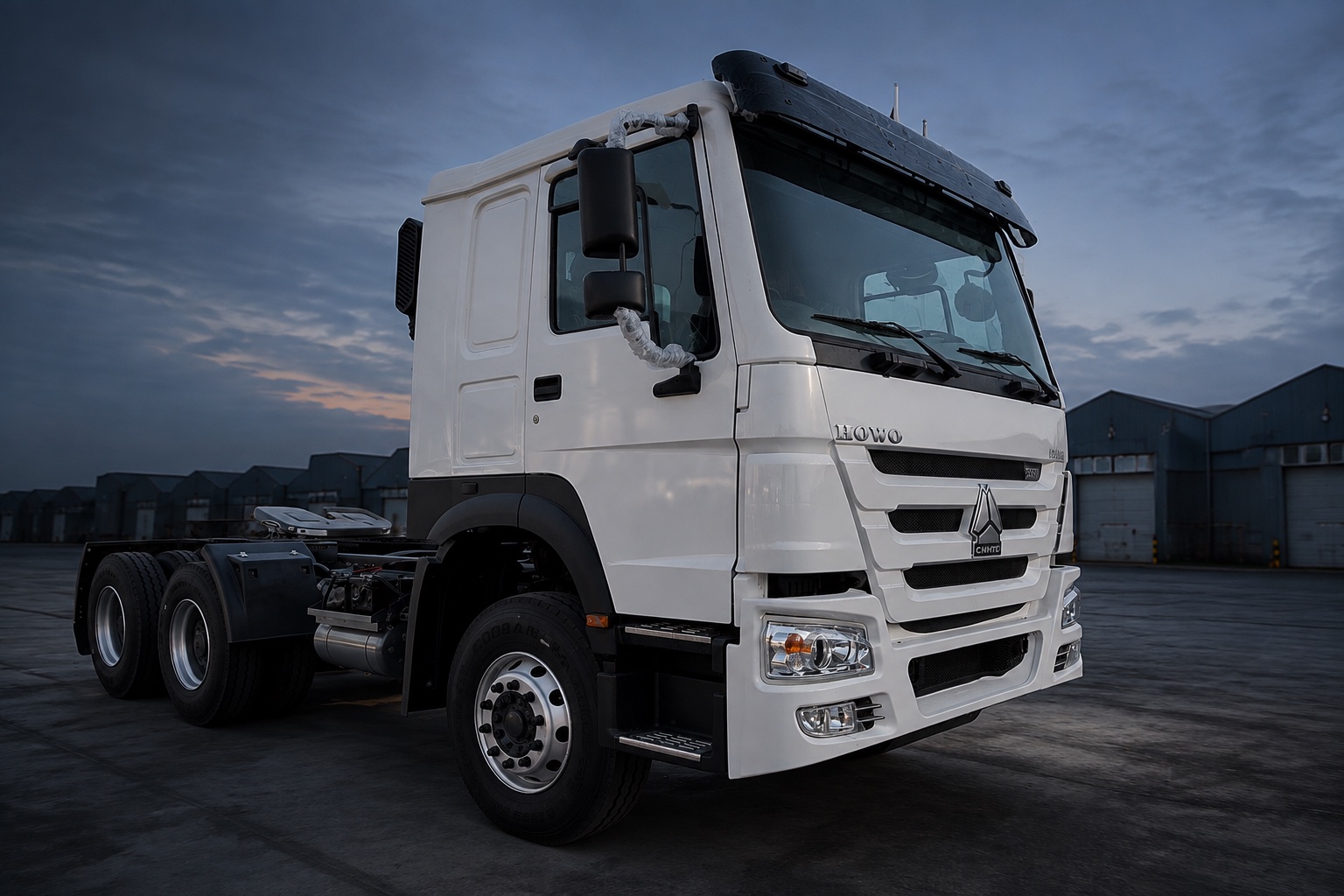
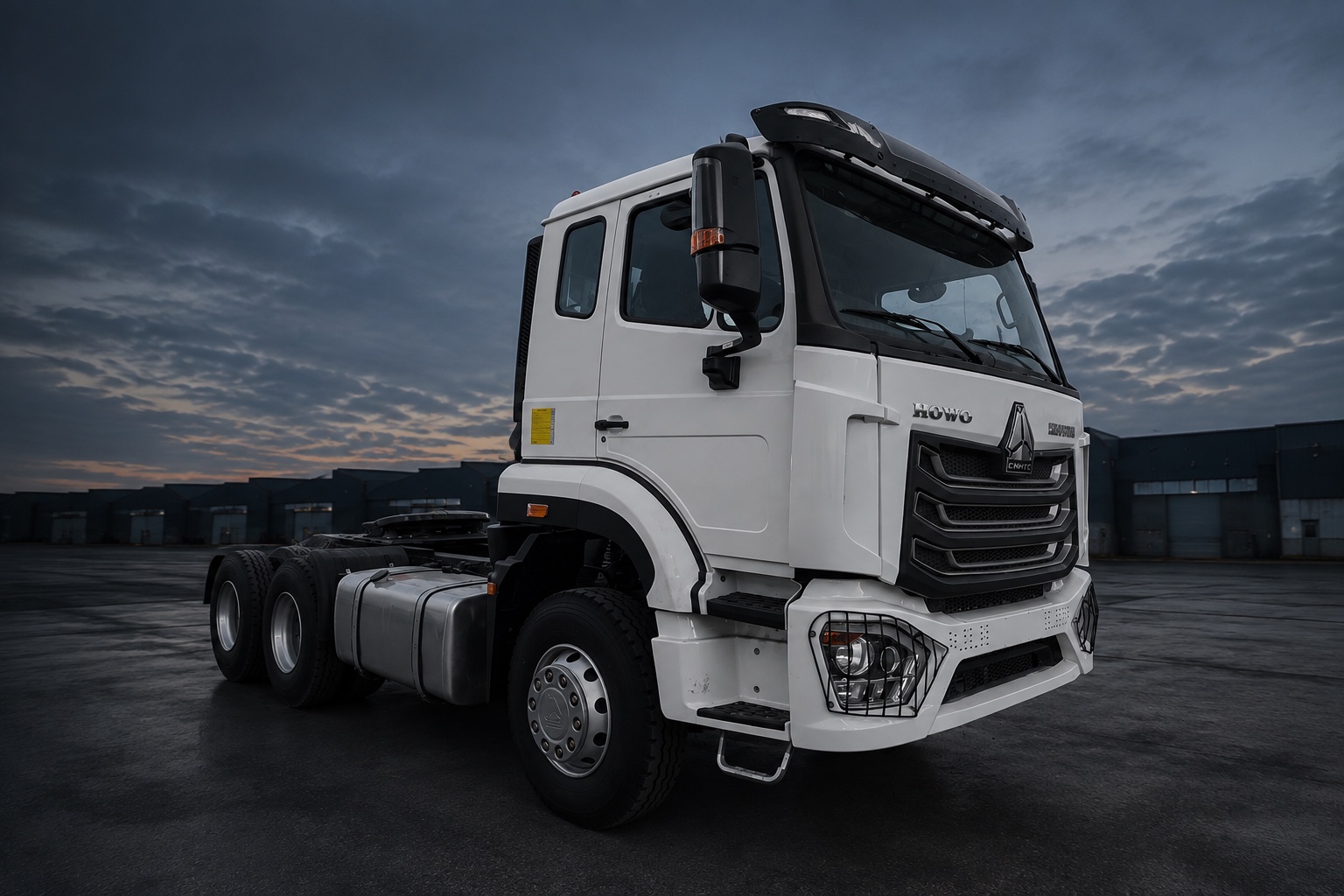
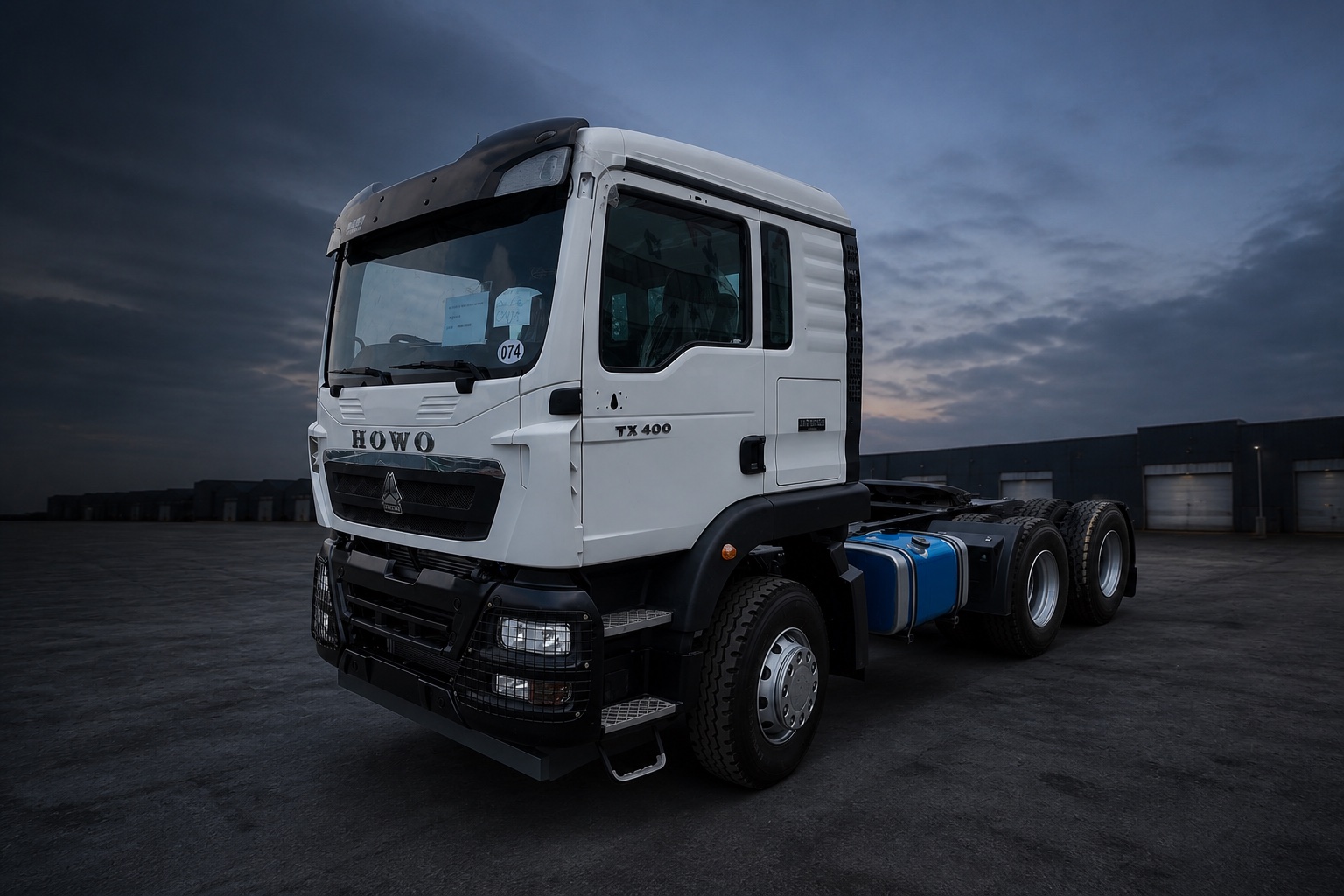
Ruidite supplies new, remanufactured, and refurbished HOWO and SHACMAN trucks for export. Before asking for a price, prepare a short operating brief. State the heaviest cargo you expect to move, the empty trailer weight, typical route, road surface, steep sections, and destination country. That information gives the supplier a basis for proposing a suitable configuration instead of offering a generic 6x4 tractor.
Start with the complete combination weight
The tractor's job is to move the gross combination weight, not only the cargo. Add the cargo, trailer tare weight, tractor kerb weight, fuel, driver, tools, and any accessories carried on the neck or deck. A 60 tonne machine on a 15 tonne lowbed is already a very different task from a container trailer carrying ordinary cargo.
Ask the trailer builder for its tare weight, axle arrangement, kingpin load, and rated payload. Then check the intended gross combination weight against the tractor's permitted rating and the destination's legal limits. Ratings from a brochure do not override local road rules, bridge limits, permit conditions, or axle-load enforcement.
Choose the axle configuration for traction and payload
A 6x4 tractor is the usual starting point for general lowbed work. It has two driven rear axles, useful traction on uneven loading areas, and a broad parts base in many export markets. For moderate payloads on paved routes, it can be a practical balance of cost, tyre count, and service familiarity.
A 6x6 tractor adds front-axle drive. That helps when the route includes muddy quarry entrances, unpaved project roads, steep ramps, or wet construction sites. It also adds cost, weight, and drivetrain complexity. Specify 6x6 because the operating environment needs it, not because it sounds stronger.
For heavy or wide loads, an 8x4 tractor may improve legal axle distribution and stability, but it does not create the off-road traction of a 6x6. The correct choice depends on how the trailer transfers kingpin weight and on the rules where the combination will operate. Share the trailer drawing before choosing between 6x4, 6x6, and 8x4.
Match engine output to route, not just payload
Engine power matters most when the truck must restart on an incline, maintain speed on long grades, or work in hot weather with a high gross combination weight. Do not select an engine only by horsepower. Torque curve, transmission ratios, cooling capacity, altitude, and driver habits all affect usable performance.
Tell the supplier the maximum loaded weight and the steepest regular grade. If the route crosses mountains or includes repeated stop-start work, request the proposed engine model and torque rating in writing. This also makes later parts ordering easier. The engine number and chassis number should be checked during pre-shipment inspection, as explained in our truck chassis number verification guide.
Specify the gearbox and final-drive ratio together
Lowbed work needs low-speed control as well as road speed. A transmission with suitable low gears helps the driver move a heavy load off the ramp, climb slowly through a site, and reduce clutch stress. The rear-axle ratio then determines how the available engine torque reaches the wheels.
Fast road gearing may suit long highway routes with a lighter trailer. It can be unsuitable for repeated heavy starts and steep site access. Conversely, a low final-drive ratio can improve pulling force but raise engine speed and fuel use during empty return trips. Ask for the complete engine, gearbox, and axle-ratio proposal rather than comparing one component in isolation.
Our 10-speed versus 12-speed gearbox guide explains the questions to raise before selecting a transmission. For a lowbed order, add the loaded starting grade and the trailer's intended payload to that conversation.
Check fifth-wheel, kingpin, and chassis fit
The fifth wheel must suit the trailer kingpin diameter, kingpin load, and operating height. A mismatch can affect trailer clearance, steering response, and the load carried by each axle. Ask for the fifth-wheel specification, mounting position, and height under normal operating condition.
The tractor frame also needs enough space for the trailer swing, hydraulic lines if fitted, air lines, electrical cable, and the trailer neck. A low deck may sit close to the tractor frame at full articulation. Provide side and rear trailer drawings, not only a front photograph. This lets the supplier check clearances before the vehicle is assembled or refurbished.
Treat braking and auxiliary braking as core equipment
A heavily loaded combination places far more demand on braking than an unloaded tractor. Confirm the tractor and trailer use compatible air-brake connections, couplings, and electrical sockets. Confirm whether the destination requires ABS, EBS, or a particular connector standard. These requirements vary by market and trailer type.
Engine braking, an exhaust brake, or another auxiliary braking system can reduce service-brake heat on long descents. It is not a replacement for correct trailer brakes and driver technique. The full combination still needs brake testing before dispatch. Use our air-brake inspection guide to prepare the inspection points.
Plan tyres, suspension, and ground clearance
Tyres must carry their share of the actual axle load, including the weight transferred from the trailer kingpin. Ask for tyre size, ply rating or load index, brand, and manufacturing date. A lowbed combination may spend time on rough yards, so sidewall protection and an available local replacement size can matter more than a low initial tyre price.
Suspension choice affects ride, traction, and service. Mechanical suspension is familiar and robust in many heavy-haul environments. Air suspension may offer ride-height control, but it needs a dependable air system and local support. Ground clearance should also be checked against ramps, ferry approaches, and unpaved access roads.
Confirm compliance before the truck leaves China
Import rules can affect the permitted age, steering side, emissions treatment, lighting, tyres, axle loads, and registration documents. A remanufactured or refurbished truck may still be classified by its original year of manufacture in the destination country. Confirm the rule with the relevant authority, customs broker, or qualified local agent before payment.
Send the supplier your country requirements early. They can then include the agreed configuration in the proforma invoice and prepare documents that identify the tractor accurately. Our truck import documents checklist is a useful starting point, but it does not replace destination-specific advice.
Put the specification into the purchase order
The final purchase order should list the tractor model, drive configuration, engine model, gearbox, axle ratio, fifth-wheel details, tyre specification, suspension, brake equipment, cab side, paint, accessories, and documentary requirements. Attach the trailer drawing and record the maximum intended gross combination weight.
Use this checklist before you approve the order:
- Confirm the cargo weight, trailer tare weight, and intended gross combination weight.
- Attach the trailer drawing with kingpin size, kingpin load, and operating height.
- Record the engine, gearbox, axle ratio, drive configuration, and tyre specification.
- State the required brake connections, electrical socket, and auxiliary braking equipment.
- Check destination rules for vehicle age, steering side, emissions, lighting, and axle loads.
- Require photos, identification numbers, and inspection evidence for the exact tractor offered.
Before balance payment, inspect the actual unit against that list. Check chassis and engine numbers, tyre dates, fifth-wheel markings, air and electrical connections, and accessible controls. Ruidite can discuss a configuration that fits your lowbed trailer and export route, then provide photos and specification details for the exact truck offered.
Related trucks
Ready to import with confidence?
Tell us what you need. We'll respond within one business day with specifications, EXW or CIF pricing, and document support for your market.
Request a Quote