Engine Brake vs Exhaust Brake vs Retarder: What Should Your HOWO or SHACMAN Have?
Service brakes stop the truck, but auxiliary braking controls speed on long descents. Here is how to specify the right system for your route and payload.
Auxiliary braking protects the service brakes
A loaded truck descending a long grade converts enormous energy into heat. If the driver relies only on the wheel brakes, their components can overheat and braking performance can fade. An auxiliary system slows the driveline, helping the driver control speed and keep the service brakes ready for stopping.
For HOWO and SHACMAN buyers, the common terms are exhaust brake, engine brake, and hydraulic retarder. They are not interchangeable. The right choice depends on gross weight, gradients, gearbox, local service support, and driver training.
What an exhaust brake does
An exhaust brake uses a valve in the exhaust system to create back pressure when the driver activates it and releases the accelerator. The engine has to work against that pressure, so the driveline slows. It is a relatively simple system and is common on heavy trucks that need extra control without the cost and complexity of a retarder.
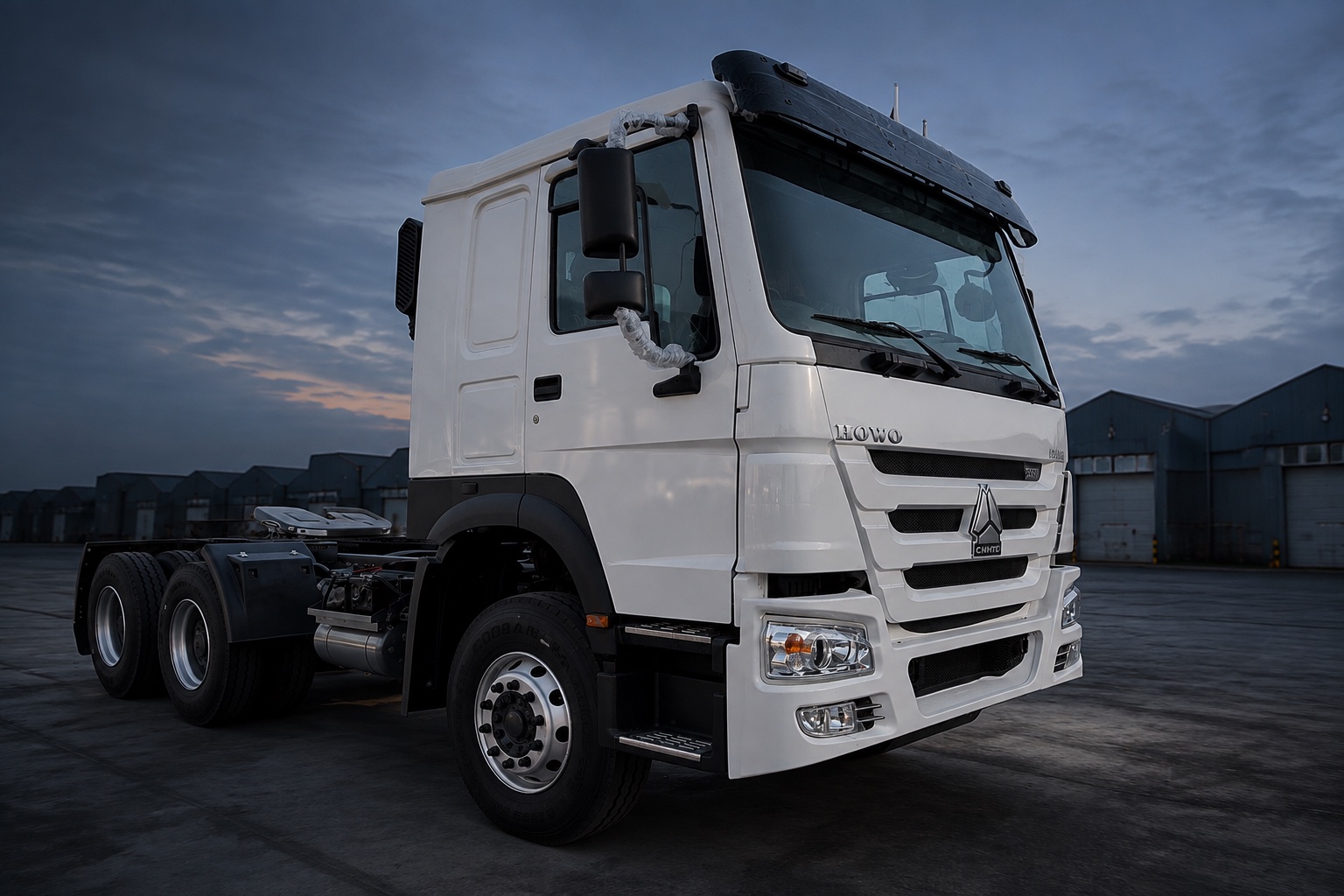
An exhaust brake is most useful on moderate descents, rolling roads, and approaches where the driver wants to reduce speed without repeatedly touching the service brake. It is often a sensible baseline for a HOWO 371 6x4 tractor or a site truck working at moderate speeds.
Its braking force is limited, especially at low engine speed. The driver must select a suitable gear before the descent so the engine stays in the effective operating range. An exhaust brake cannot compensate for an overloaded truck, an unsuitable axle ratio, or service brakes in poor condition.
How an engine brake differs
An engine brake changes what happens inside the engine during compression. Depending on the engine design, it releases compressed air near the top of the compression stroke so the energy is not returned to the crankshaft. This can produce stronger braking than a simple exhaust restriction.
Engine brake availability depends on the exact engine and build specification. A quotation that says engine brake should identify the engine model, the braking system fitted, and how many control stages the driver receives. Do not assume every Weichai, Sinotruk, or Cummins powered truck has the same arrangement.
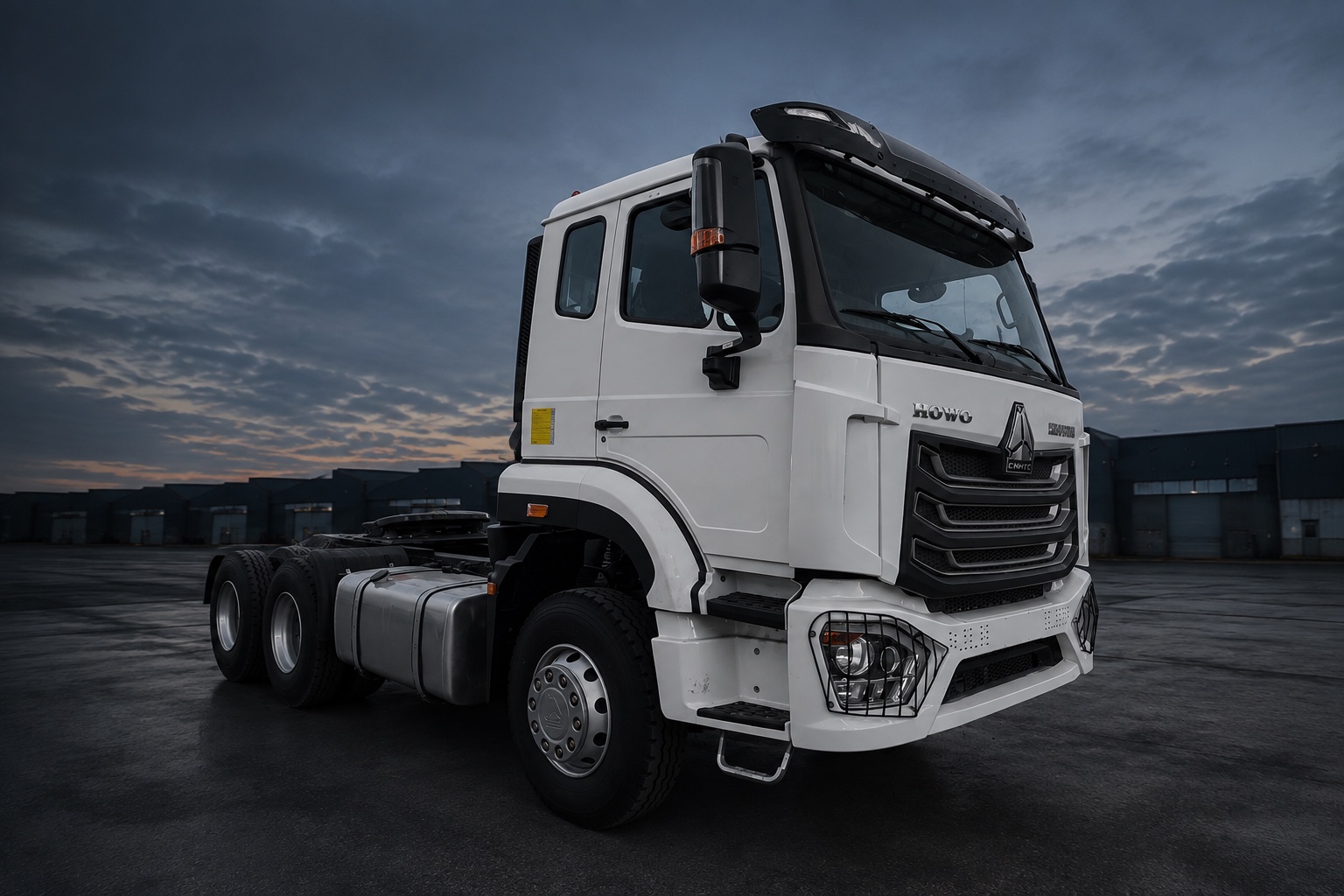
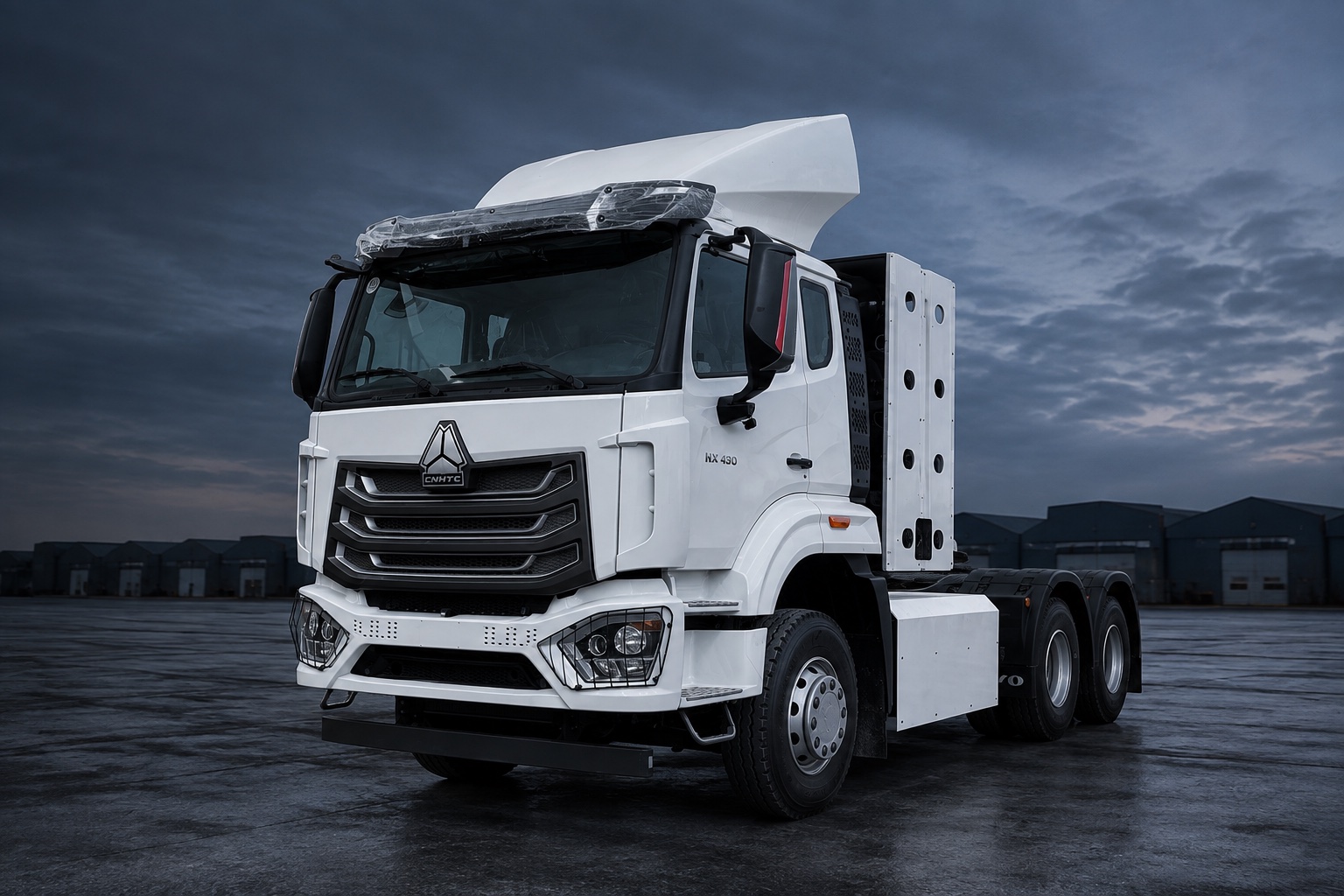
For regional and long haul work, stronger engine braking can improve downhill control without adding a separate retarder. It may suit a HOWO NX 6x4 tractor or SHACMAN H3000 tractor that regularly carries heavy loads across changing terrain. The system still depends on engine speed and correct gear selection, so driver training remains essential.
What a hydraulic retarder adds
A hydraulic retarder is fitted into or alongside the transmission. It circulates fluid between rotating and stationary elements to absorb driveline energy and turn it into heat, which is then managed through the cooling system. The driver normally selects several braking stages, allowing smooth and repeatable speed control on long descents.
The main advantage is sustained braking power. A properly specified retarder can control a heavily loaded truck for longer periods while reducing heat in the wheel brakes. It is particularly valuable for mountain corridors, tanker work, heavy regional haulage, and routes with repeated high speed descents.
That capability has costs. A retarder adds weight, cooling demand, controls, and service requirements. It must match the gearbox and cooling package. On flat short routes, it may not earn a useful return.
Match the system to the route and load
Start with the worst regular descent, not the average road. Ask how long it is, how steep it is, what gross weight the truck carries, and whether traffic forces frequent speed changes. Then compare the options:
- Mostly flat urban or site work: a standard exhaust brake may be sufficient if the service brakes are correctly maintained.
- Rolling regional roads with occasional moderate grades: a stronger engine brake can provide useful control without the full retarder package.
- Long mountain descents at high gross weight: a multi stage hydraulic retarder may justify its cost through better control and reduced service brake wear.
- Tankers, buses, and high value cargo: smoother retarder control may protect stability and cargo, but only with correct driver use.
A SHACMAN F3000 dump truck on a quarry site faces different risks from a tractor crossing a mountain border route. The tipper may need low speed traction, robust drum brakes, and protection from mud. The tractor may need sustained auxiliary braking at road speed. Specify the system around the work rather than the badge on the grille.
Cooling, gearbox, and axle ratio still matter
Auxiliary braking is part of a complete driveline. A hydraulic retarder transfers heat into its fluid and cooling circuit, so radiator condition, coolant quality, hoses, fan operation, and temperature monitoring matter. Ask whether the cooling package is specified for retarder use in the destination climate.
Gearbox choice also affects operation. The driver needs ratios that keep engine speed in the effective braking range without exceeding safe revolutions. The axle ratio and tyre size determine road speed in each gear. Review these items together using the same discipline explained in our 10 speed vs 12 speed gearbox guide.
Never use an auxiliary system as permission to descend faster. The service brakes, tyres, suspension, and road grip set the final safety limits. Drivers need clear instructions for slippery roads and unloaded operation.
Maintenance and parts planning
An exhaust brake needs inspection of the valve, actuator, wiring, air lines where fitted, and exhaust system. Carbon buildup or a sticking valve can reduce performance. An engine brake adds engine specific controls and components, so diagnosis should follow the correct engine manual.
A retarder requires the right fluid, seals, control system, and cooling capacity. Leaks, warning codes, overheating, or incorrect fluid can turn an expensive option into downtime. Before ordering, confirm that your workshop can service the exact gearbox and retarder model. Add the relevant filters, seals, sensors, and fluid specification to the purchase file and consider them when planning the spare parts shipped with the truck.
Put measurable details in the order
The proforma invoice should state more than auxiliary brake included. Confirm:
- Engine make, model, and rated power
- Exhaust brake or engine brake type and control stages
- Gearbox make and model
- Retarder make, model, rated braking torque, and number of stages if fitted
- Cooling package and required fluid specification
- Warning lights, dashboard controls, and any diagnostic equipment
- Compatibility with the axle ratio, tyre size, body, and intended gross weight
These details let you compare quotations accurately and order replacement parts later. They also prevent a familiar sales phrase from hiding a basic system that does not meet the route requirement.
Inspection and road test before shipment
Include the auxiliary brake in the pre shipment inspection. Confirm the installed components match the contract, check for leaks and damaged wiring, and scan for warning codes. On a remanufactured or refurbished truck, verify that controls, sensors, cooling lines, and dashboard indicators have been tested rather than only cleaned and painted.
The road test should activate every stage and confirm that braking builds smoothly without abnormal noise, vibration, overheating, or warning lights. Service brakes must also be tested separately because the auxiliary system supports them but never replaces them.
The practical buying decision
Choose an exhaust brake for straightforward support on moderate routes, an engine brake when the engine specification offers stronger control for regular grades, and a hydraulic retarder when long descents and high gross weight create a clear need for sustained braking. Confirm parts and technician support before paying for complexity.
Ruidite supplies new, remanufactured, and refurbished HOWO and SHACMAN trucks from Qingdao for export. Tell us your route, maximum gross weight, steepest regular descent, body type, and local service capacity, and we will help specify a practical braking and driveline package before you order.
Related trucks
Ready to import with confidence?
Tell us what you need. We'll respond within one business day with specifications, FOB Qingdao pricing, and document support for your market.
Request a Quote